



22 Sep Allurion Swallow Balloon treatment for Weight loss in Mohali : Who’s a Good Candidate?
Allurion swallow pill is a form of swallowable capsule on OPD basis. It’s not surgery. There are no cuts. No endoscopy in most cases. You swallow a capsule, it becomes a balloon inside the stomach, and it helps you feel full sooner.
But the bigger question is not “does it work for some people?” The real question is.
Are you the right candidate for Allurion swallowable weight loss capsule
Let’s get into who tends to do well with a swallowable balloon, who should not get it, and how clinics like CODSILS (www.codsils.com) usually think about candidacy when weight loss and metabolic health are the actual goal.
What exactly is a swallowable balloon?
A swallowable balloon is a temporary weight loss device placed in your stomach without surgery.
The general idea looks like this:
- You swallow a capsule attached to a thin tube.
- Placement is confirmed (often by X-ray or imaging).
- The balloon is filled with fluid through the tube.
- The tube is removed, and the balloon stays in the stomach for a set period of 5-6 months.
- Later, it deflates and passes naturally.
The balloon takes up space. So you feel full with less food. That fullness can be a big deal, because it makes portion control finally feel realistic, not like a daily fight.
But. And this matters.
The balloon is a tool. Not the plan. The plan is the food habits, follow ups, and behaviour changes you build while it is inside.
The “good candidate” question is mostly about safety and fit
People hear “no surgery” and assume it’s automatically for everyone.
Not really.
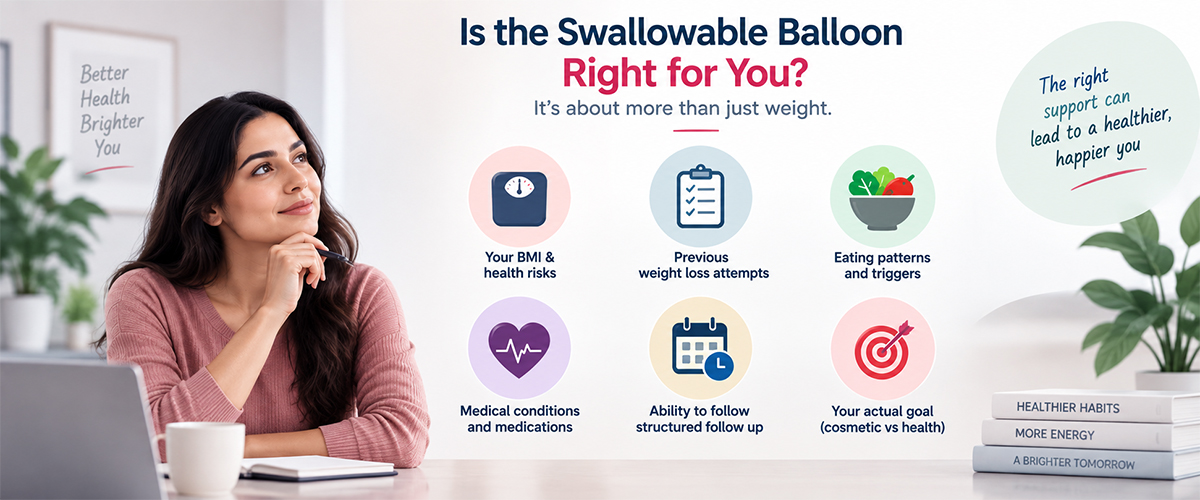
Clinics typically look at:
- BMI and current health risks
- Your previous weight loss attempts
- Eating patterns and triggers
- Medical conditions and medications
- Whether you can follow structured follow up
- What your actual goal is (cosmetic vs health vs metabolic improvement)
You can be medically eligible but still not a great fit if you are not ready for the lifestyle part. And you can be motivated and ready, but not eligible because of reflux or stomach issues.
So let’s break it down properly.
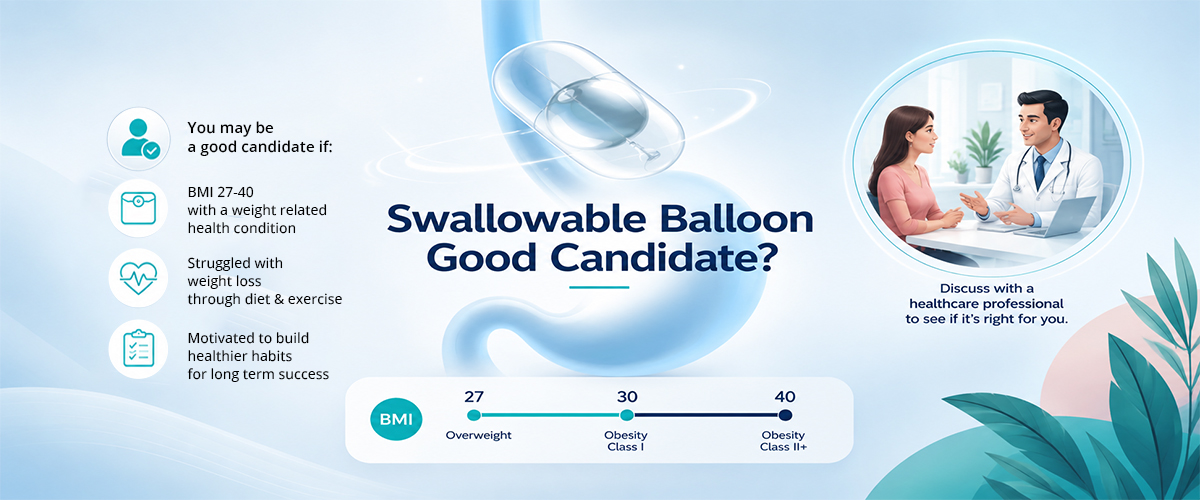
1. BMI range: who it’s usually meant for
Swallowable balloons are generally considered for people with overweight or obesity who want a non-surgical, temporary option.
In many real-world settings, good candidates often fall into one of these buckets:
BMI around 27 to 30 (overweight) with health concerns
If your BMI is in the high 20s and you also have early metabolic issues like:
- Prediabetes
- High triglycerides
- Fatty liver changes
- High blood pressure beginning
- PCOS with weight linked insulin resistance
Then a balloon may be considered as a jumpstart. Not for “quick weight loss.” More like a push to reverse the trend before it becomes harder.
BMI 30 to 40 (obesity)
This is the range where balloons are commonly discussed. Especially if:
- You are not ready for bariatric surgery
- You do not qualify for surgery
- You want something less invasive first
- You need weight loss to reduce risk before another procedure (more on that later)
BMI above 40
This gets tricky.
Some people with BMI above 40 can use a balloon, but it may not be enough as a standalone solution. Many clinics look at it as:
- A bridge to surgery
- A way to reduce anesthesia risk
- A step before a more definitive bariatric procedure
At a bariatric focused clinic like CODSILS, candidacy is often discussed in the bigger context. Meaning, balloon vs surgery vs medical weight loss vs combined metabolic care. Because the goal is not just dropping weight. It’s improving long term health.
2. You’ve tried lifestyle changes, but hunger and portions win
This is one of the most common “good candidate” profiles.
You are not clueless. You already know what a healthier plate looks like. You can do it for a week or two.
Then hunger kicks in. Cravings. Late evening eating. Portion creep.
A balloon can help because it physically changes the early phase of eating. People often report:
- Feeling full faster
- Less ability to overeat
- Better control over portion size
- Less intense urge to keep going
If your issue is mainly volume eating or portion control, you might benefit more than someone whose main issue is constant liquid calories, sugary drinks, or frequent snacking that slides past fullness cues.
A good candidate is usually someone who says:
“I don’t want surgery right now, but I also don’t want to waste time pretending I can fix this with willpower alone.”
That mindset matters.
Because swallowable balloons are temporary. If you treat it like a magic trick, the weight often comes back when the balloon is gone.
So the best candidates are realistic about:
- The balloon is a support, not the driver
- There will be side effects early on
- They will need follow ups
- They will need to change how they eat
If you are expecting effortless weight loss without discomfort or adjustment, this is probably going to disappoint you.
4. You can commit to follow up visits and nutrition guidance
This sounds boring but it’s one of the biggest predictors of success.
The people who do well typically:
- Keep regular appointments
- Track progress in some way
- Follow a structured meal plan early on
- Adjust habits during the balloon period
- Treat the balloon period as training time
At clinics like CODSILS, weight loss options are usually paired with nutrition and metabolic guidance because obesity is not just calories. It’s hormones, insulin resistance, routines, sleep, stress, and a whole lot of patterns built over years.
5. You have obesity related conditions and want metabolic improvement
If you have:
- Prediabetes or type 2 diabetes (especially early)
- Fatty liver (NAFLD)
- High blood pressure
- Dyslipidemia (high cholesterol or triglycerides)
- PCOS and irregular cycles linked to weight
- Sleep apnea suspicion (snoring, daytime fatigue)
Then weight loss can have huge impact. Not always, but often.
Now, for diabetes specifically, the right approach depends on severity, duration, and medications. Some people will do better with bariatric surgery for metabolic control. Some do well with medical weight loss, sometimes with GLP 1 medications. Some may consider a balloon as part of a broader program.
This is where an obesity and metabolic focused clinic matters, because you want your plan built around health outcomes, not just a device.
6. You need to lose weight before another surgery or fertility treatment
This is a very practical use case.
Sometimes someone needs weight reduction to:
- Lower anesthesia risk
- Make laparoscopic surgery safer
- Reduce complications
- Improve fertility outcomes
- Improve PCOS and ovulation patterns
In these “bridge” situations, a swallowable balloon can be considered because it is less invasive than bariatric surgery and can deliver meaningful short term weight loss, enough to shift risk.
But candidacy still depends on stomach health and overall medical status.
Who is NOT a good candidate for a swallowable balloon?
1. Significant GERD or severe acidity issues
If you have uncontrolled reflux, frequent heartburn, esophagitis, or a known hiatal hernia, a balloon can worsen symptoms.
2. History of stomach or esophageal surgery
Previous surgeries involving the stomach or esophagus can change anatomy and increase risk. Many balloon programs consider this a contraindication.
3. Active ulcers, gastritis, inflammatory bowel disease flares
If your stomach lining is already irritated or you have active ulcer disease, placing a balloon can create more irritation and complications.
4. Bleeding disorders or certain anticoagulant use
If you are on blood thinners or have bleeding risks, your team needs to evaluate whether balloon placement is safe.
Even if swallowable balloons avoid endoscopy for placement, there can still be GI risks.
5. Pregnancy or planning pregnancy immediately
Weight loss devices are not used in pregnancy. And most programs will advise avoiding pregnancy during the active balloon period.
6. Severe eating disorders or uncontrolled binge eating
This is delicate, but it matters. If someone has untreated binge eating disorder or bulimia, a balloon does not fix the underlying pattern. In some cases, it can worsen distress or lead to unsafe behavior.
7. You cannot commit to the dietary phases
There are usually diet phases after placement. Liquids first, then soft foods, then gradual progression.
Side effects: the early days are usually the hardest
A good candidate is also someone who can tolerate the reality of the first week.
Common early side effects include:
- Nausea
- Vomiting
- Stomach cramping
- Reflux
- Feeling very full, very fast
- Fatigue for a few days
Most people improve after the adjustment phase, but that initial period is not always smooth. You will need medications sometimes, and you need guidance on hydration.
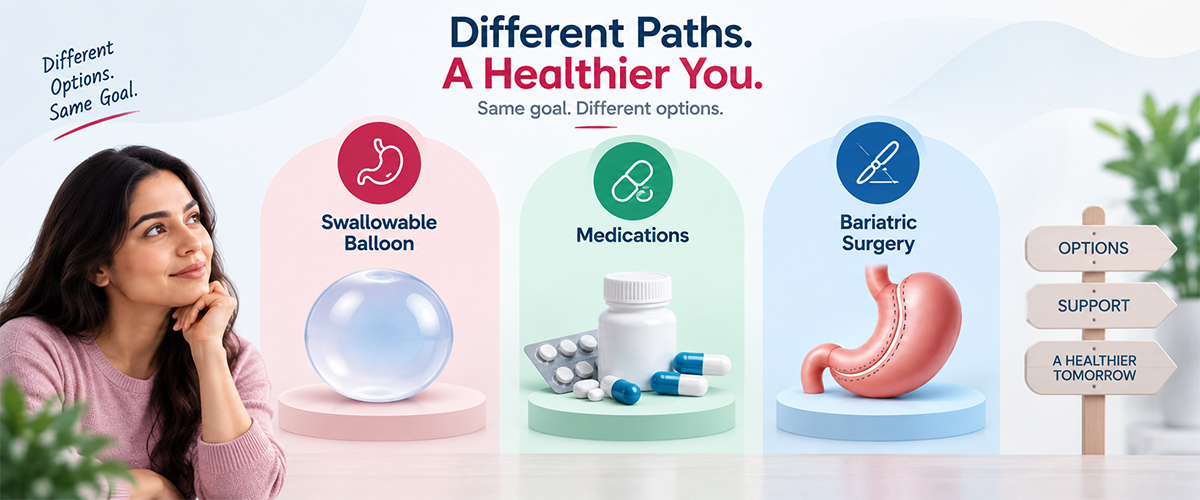
Balloon vs medications vs bariatric surgery: where does it sit?
This is where many patients get stuck because there are now multiple routes.
Very roughly:
- Medications (like GLP 1 class) can be excellent for appetite regulation, especially for people with insulin resistance. But they require ongoing use for many, and cost can be a factor.
- Swallowable balloon is temporary, non surgical, can create a strong portion control effect quickly, but still requires habit change.
- Bariatric surgery (like sleeve gastrectomy, gastric bypass) is more invasive but often produces the most durable weight loss and metabolic improvement for higher BMI and diabetes.
A clinic like CODSILS is positioned to help with this comparison because they focus on obesity plus diabetes or metabolic care plus minimally invasive bariatric surgery. Which means you can actually sit down and map out options instead of guessing from the internet.
If you’re exploring, that’s a good time to book a consultation through www.codsils.com and ask directly: “Am I a balloon candidate, or is there a better option for my health profile?”
If you want a professional opinion based on your BMI, metabolic health, and goals, you can explore your options with the team at CODSILS. The clinic focuses on obesity, diabetes and metabolic care, and minimally invasive bariatric procedures, so you’re not limited to one approach. You can start here: www.codsils.com.
FAQs (Frequently Asked Questions)
01 – What is a swallowable balloon for weight loss and how does it work?
A swallowable balloon is a temporary, non-surgical weight loss device placed in your stomach by swallowing a capsule attached to a thin tube. Once inside, the balloon is filled with fluid or gas, taking up space in the stomach to help you feel full sooner. This fullness aids in portion control, making it easier to eat less and support weight loss efforts.
02 – Who is considered a good candidate for the swallowable balloon?
Good candidates typically include individuals with a BMI between 27 and 40 who have health concerns like prediabetes or high blood pressure, have tried lifestyle changes but struggle with hunger and portion control, want a non-surgical option, are realistic about the balloon’s role as a supportive tool (not a magic fix), and can commit to follow-up visits and nutrition guidance.
03 – Can people with a BMI over 40 use the swallowable balloon?
People with a BMI above 40 may use the swallowable balloon as a bridge to bariatric surgery or to reduce anesthesia risk before more definitive procedures. However, it may not be sufficient as a standalone solution.
04 – Does getting a swallowable balloon require surgery or endoscopy?
No, the swallowable balloon does not require surgery or endoscopy in most cases. The capsule is swallowed, the balloon is inflated inside the stomachthrough the attached tube which is then removed, leaving the balloon temporarily inside without invasive procedures.
05 – What lifestyle changes are necessary when using a swallowable balloon?
Using a swallowable balloon requires commitment to food habit changes, regular follow-ups, and behavior adjustments. The balloon supports portion control by creating fullness but lasting weight loss depends on adoptin healthier eating patterns and maintaining them after the balloon is removed.
06 – Are there any side effects or challenges associated with the swallowable balloon?
Yes, some people experience early side effects such as discomfort as their body adjusts to the balloon. It’s important to be realistic that weight loss requires effort beyond just having the device; ongoing follow-up care and nutrition guidance are essential for success.
