



16 Sep How Much Weight Loss Is ‘Normal’ After Sleeve?
If you are reading this, there is a decent chance you have either had a sleeve gastrectomy already, or you are thinking about it and trying to picture your “after”.
And the first thing most people want to know is, How much weight will I lose. And how fast. But the slightly annoying truth is that “normal” after sleeve is a range, not a single number. Two people can have the same surgery with the same surgeon, follow the plan pretty well, and still lose at different speeds.
What “normal weight loss” even means after sleeve
Most clinics and studies talk about results using one of these:
1) Excess Weight Loss (EWL%)
This is the percent of weight you lose above your “ideal” weight
2) Total Weight Loss (TWL%)
This is the percent of your starting body weight that you lose.
People often mix these up and it makes expectations messy. Like, someone says “I lost 60%” and that could mean totally different things depending on which number they’re using.
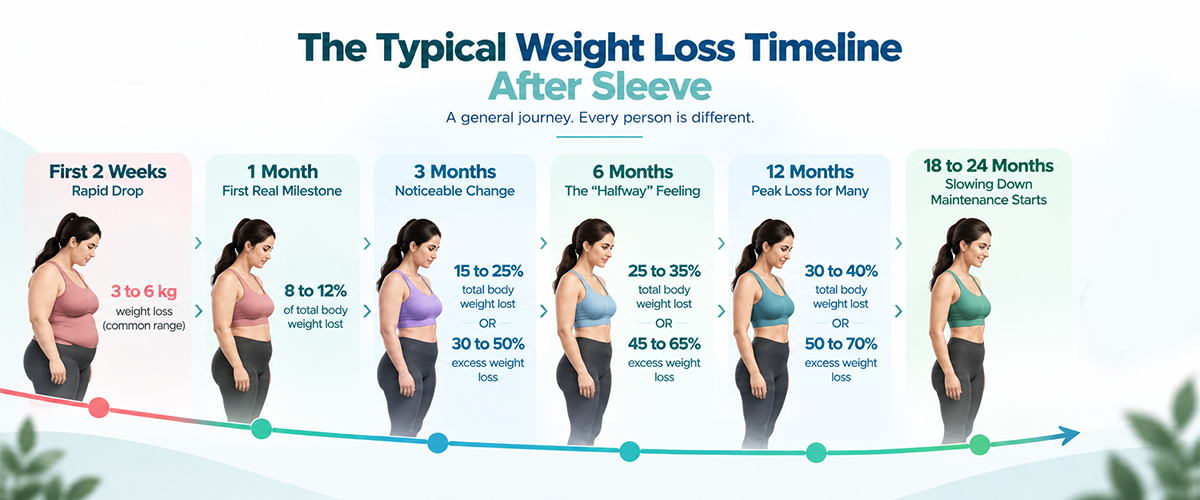
The typical weight loss timeline after sleeve (month by month, roughly)
There is a pattern most people follow after sleeve:
- Big drop early on (first 1 to 3 months)
- Then steady loss (3 to 6 months)
- Then it slows (6 to 12 months)
- Then it slows again (12 to 18 months) and becomes more about maintenance and body re-composition.
Not everyone fits perfectly. But this is the general arc.
First 2 weeks: rapid drop, mostly water plus some fat
In the first days after surgery, weight can fall quickly. Some of that is fat loss, but a lot is:
- lower calories
- lower carbs
- less fluid retention
- post op inflammation settling
A common “normal” range: around 3 to 6 kg in the first 2 weeks.
Some people see more, some less.
1 month: the first real milestone
By 4 weeks, most people see a visible change.
A common “normal” range at 1 month:
- 8 to 12% of total body weight lost
Someone starting at a higher weight often loses more pounds in the first month. Someone starting closer to goal may lose fewer pounds but still be doing fine.
3 months: noticeable body change, people start commenting
This is usually where results feel real. Energy improves. Clothes fit differently. Inches drop.
A common “normal” range at 3 months:
- 15 to 25% total body weight lost
- Or
- roughly 30 to 50% excess weight loss
Again, wide range. But if you’re in that ballpark, you’re generally on track.
6 months: the “halfway” feeling
By 6 months, many patients have lost a big chunk of what they will lose in the first year.
A common “normal” range at 6 months:
- 25 to 35% total body weight lost
- Or
- roughly 45 to 65% excess weight loss
A lot of metabolic improvements show up here too. Blood sugar, blood pressure, triglycerides, sleep apnea symptoms. Sometimes before the “goal weight” is even reached.
12 months: peak loss for many people
Many people hit their lowest weight somewhere between 12 and 18 months after sleeve. Some earlier, some later.
A common “normal” range at 12 months:
- 30 to 40% total body weight lost
- Or
- roughly 50 to 70% excess weight loss
If you hear clinics quote something like “60% excess weight loss at 1 year”, that’s the kind of number they mean.
18 to 24 months: slowing down, maintenance starts
At this point, weight loss often becomes gradual. And the real work becomes:
- maintaining habits
- building muscle
- managing stress and sleep
- preventing regain
Some patients continue to lose slowly. Some stabilize. A small regain can happen and still be normal, depending on how much and why.
So what’s considered “too slow” after sleeve?
This is the part people stress over. Because you see huge drops online, and if yours looks calmer, you assume you’re failing.
In reality, slow loss can still be normal.
But here are some rough flags that deserve a conversation with your bariatric team:
- Barely any weight loss by 6 to 8 weeks, especially if you are following the diet stages closely.
- Consistent weight gain early(not just a few days of fluctuation).
- Very low protein intake and you can’t tolerate protein, leading to fatigue and muscle loss.
- Frequent grazing or liquid calories (more on that later).
- Vomiting or reflux that limits intake and makes nutrition chaotic.
Also, let’s talk about the famous “3 week stall”.
The 3 week stall is real, and it’s common
Many sleeve patients lose quickly in the first 2 weeks, then suddenly stop losing around week 3 or 4. Sometimes the scale does nothing for 10 to 20 days.
This is so common that it’s basically a rite of passage.
Reasons include:
- your body replenishing glycogen and water
- healing processes
- hormonal shifts
- changes in bowel patterns
If you are hitting protein and fluids, moving daily, and following the plan, you usually just ride it out. The loss resumes.
What’s considered “too fast” after sleeve?
It sounds like a good problem to have. But extremely fast loss can sometimes mean:
- dehydration
- too little protein
- too few calories for too long
- muscle loss
- gallstone risk increases with rapid loss
- vitamin deficiencies
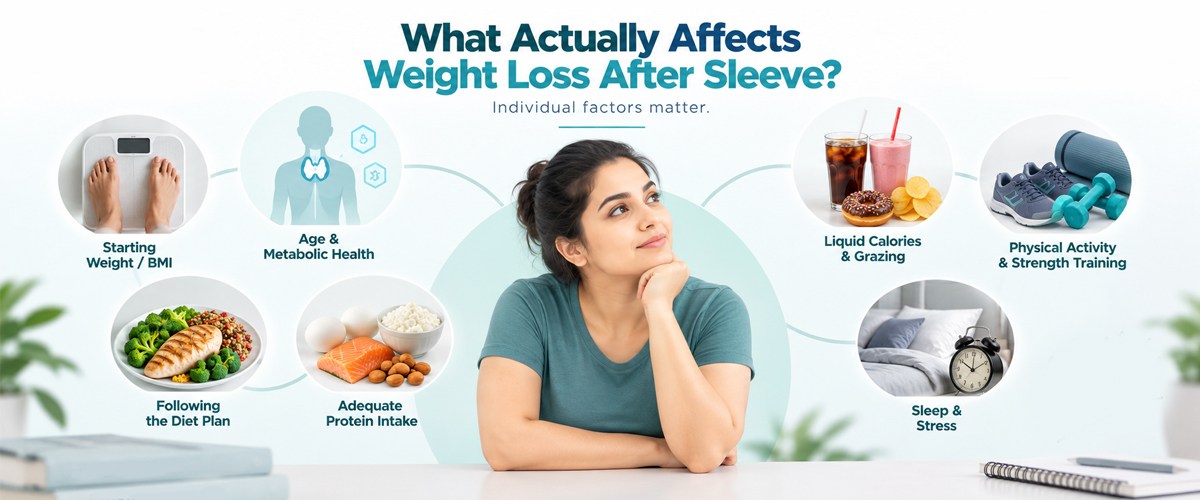
What actually affects how much you lose (the real factors)
People want one magic number, but results depend on a bunch of things. Here are the big ones.
1) Starting BMI and body composition
Higher starting weight usually means:
- bigger early drops in kilograms
- but not always higher percent loss
Also, two people at the same weight can have different muscle mass. More muscle can mean a slower scale drop but better shape changes.
2) Age, hormones, and metabolic conditions
PCOS, hypothyroidism, insulin resistance, menopause. These can affect pace.
Sleeve can still work very well in these cases. But expectations should be realistic and you may need closer medical and nutrition follow up.
3) Adherence to the post op stages (and not “freestyling” early)
The first weeks are structured for a reason. Liquids, purees, soft foods, then regular textures.
If someone starts eating regular foods too early, or tests tolerance with slider foods (chips, biscuits, sweets that melt), weight loss can slow quickly.
4) Protein intake (this is huge)
Protein helps:
- preserve muscle
- control hunger
- support healing
- keep metabolism healthier
Most programs target something like 60 to 90 grams per day, sometimes more depending on body size and activity. Your team will give your number.
5) Liquid calories and “grazing” are the quiet killers
Sleeve restricts volume. It does not stop calories from getting in.
Things that can stall loss even with a small stomach:
- sugary tea or coffee drinks
- juices
- alcohol (later on)
- frequent snacking
- peanut butter, nuts, chips, chocolates
- “just a bite” all day long
A sleeve works best when you eat structured meals with protein first. Not constant little nibbles.
6) Physical activity (especially strength training later)
In the early weeks, walking is enough. Later, adding resistance training can:
- preserve or build muscle
- improve body shape
- improve insulin sensitivity
- reduce long term regain risk
You don’t have to become a gym person overnight. But some form of strength work, even twice a week, makes a difference over time.
7) Sleep and stress
This gets ignored, but it matters. Poor sleep and chronic stress can:
- increase cravings
- raise cortisol
- worsen insulin resistance
- make adherence harder
You can do everything “right” on paper and still struggle if sleep is broken for months.
What about inches lost vs weight lost?
Some weeks the scale barely moves and your waist shrinks. That is not imaginary.
After surgery, your body can:
- lose fat
- hold water due to inflammation or hormones
- change glycogen storage
- shift digestion and bowel volume
So track more than weight:
- waist, hip, thigh measurements every 2 to 4 weeks
- how clothes fit
- progress photos monthly
- fitness markers like walking distance or stairs
What weight loss results are realistic long term?
Most data suggests sleeve patients, on average, achieve something like:
- 50 to 70% excess weight loss in 1 to 2 years
- 25 to 35% total body weight loss is a common practical range
Some lose more. Some lose less. The “less” group is often dealing with factors like severe metabolic disease, limited follow up, poor protein intake, liquid calories, untreated mental health issues, or life events that disrupt the routine.
And. This is important. “Success” is not only the scale.
If you reduce diabetes medications, improve blood pressure, stop snoring, regain fertility, walk without knee pain, or fit into an airline seat comfortably, that counts. A lot.
A note about follow up, because it changes outcomes more than people think
One pattern that shows up again and again is this:
Patients who keep regular follow ups with their surgeon, dietitian, and team tend to do better. Not because they are “more disciplined” necessarily. But because problems get solved early.
If you are looking for structured post sleeve guidance, nutrition support, and medical follow up for obesity and metabolic health, you can explore resources
and consultation options through CODSILS at www.codsils.com. It is the kind of support that helps you not guess your way through stalls, symptoms, or confusing plateaus.
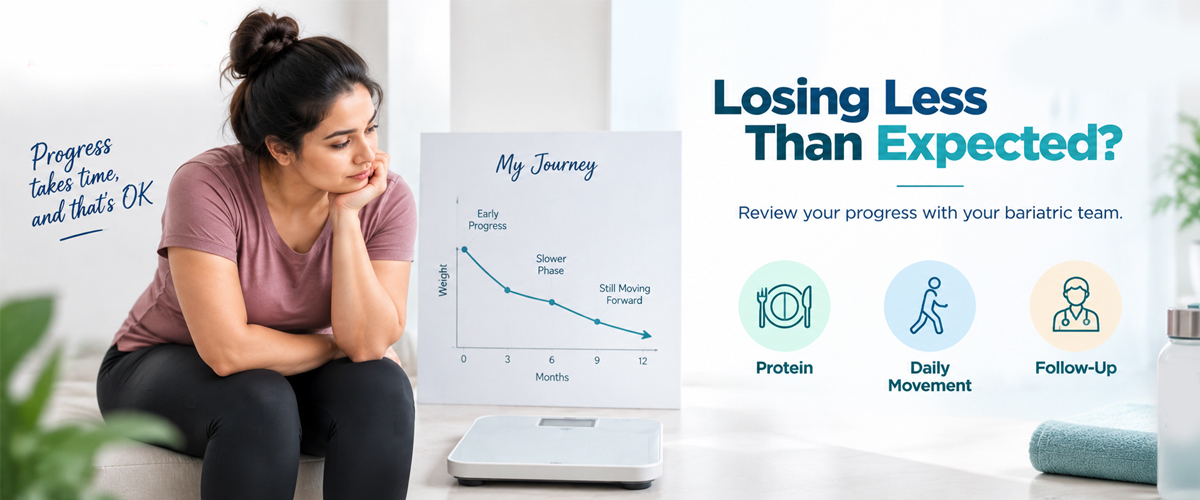
What you can do if you feel you’re losing “less than normal”
Not a huge list. Just the high impact stuff.
- Track protein for 7 days. Not forever. Just one week. See your average.
- Cut liquid calories completely (unless medically needed).
- Eat slower. Sleeve patients often learn this the hard way.
- Structure meals (2 to 4 meals depending on your plan) and reduce grazing.
- Walk daily, then add strength training when cleared.
- Get labs done on schedule and take vitamins consistently.
- Talk to your team if reflux, nausea, or intolerance is limiting protein.
The bottom line
Normal weight loss after sleeve is not one perfect curve. But generally:
- the first 3 to 6 months are the fastest
- 12 to 18 months is where many people reach their lowest weight
- typical results land around 50 to 70% excess weight loss or 25 to 35% total body weight loss, with big individual variation
And if you want a team to review your progress, stalls, diet tolerance, and metabolic health plan in a more personalized way, CODSILS (www.codsils.com) is a solid next step to explore.
FAQs (Frequently Asked Questions)
01 – What is the typical weight loss timeline after sleeve gastrectomy?
Most people experience a big weight drop in the first 1 to 3 months, followed by steady loss from 3 to 6 months. Weight loss then slows between 6 to 12 months and again from 12 to 18 months, where maintenance and body recomposition become the focus.
02 – How much weight can I expect to lose in the first month after sleeve gastrectomy?
By one month, it’s common to lose about 8 to 12% of your total body weight or roughly 10 to 20 pounds, depending on your starting weight. This milestone often shows visible changes and sets the pace for further loss.
03 – What do Excess Weight Loss (EWL%) and Total Weight Loss (TWL%) mean after sleeve surgery?
Excess Weight Loss (EWL%) measures the percent of weight lost above your ideal weight (typically BMI 25), while Total Weight Loss (TWL%) is the percent of your starting body weight that you lose. Both metrics are used but can lead to confusion if mixed up; understanding both helps set realistic expectations.
04 – When is peak weight loss typically reached after sleeve gastrectomy?
Many patients reach their lowest weight between 12 and 18 months post- surgery, with typical total weight loss ranging from 30 to 40% and excess weight loss around 50 to 70%. Individual timelines may vary.
05 – What signs indicate that my weight loss after sleeve might be too slow?
Flags for slow progress include barely any weight loss by 6 to 8 weeks despite following diet guidelines, consistent early weight gain, very low protein intake causing fatigue or muscle loss, frequent grazing or consuming liquid calories, and vomiting or reflux affecting nutrition. These warrant discussion with your bariatric team.
06 – Why do two people with similar surgeries lose weight at different speeds after sleeve gastrectomy?
Weight loss speed varies due to individual differences like metabolism, adherence to diet plans, protein tolerance, stress levels, sleep quality, and other lifestyle factors. Even with the same surgeon and plan, results can differ widely among patients.
