



15 Oct Weight Loss Surgery for Sleep apnea treatment
If you have sleep apnea and you are also dealing with obesity, you have probably noticed how tangled everything feels.
You gain weight. Your sleep gets worse. You are tired all day. You move less. Weight goes up again. And then you hear the same line over and over. “Just lose weight.” Which is… not wrong. But it’s also not that simple when your sleep is broken every single night.
Weight loss, especially meaningful weight loss, can change sleep apnea. Sometimes dramatically. And weight loss surgery for sleep apnea can be the turning point for people who have tried everything else and are still stuck.
So let’s talk about what actually changes after weight loss surgery for sleep apnea, what to expect, what does not magically disappear, and how to handle the CPAP situation without guessing.
What sleep apnea really is ?
Most people talking about sleep apnea mean obstructive sleep apnea (OSA).
That is when the throat repeatedly collapses during sleep. Airflow drops or stops. Your oxygen can dip. Your brain wakes you up just enough to restart breathing. You might not remember it, but your body does. Over and over.
Common signs:
- Loud snoring (often with pauses, gasping, choking)
- Morning headaches, dry mouth
- Waking up unrefreshed
- Daytime sleepiness, brain fog, mood issues
- High blood pressure that is hard to control
And yes, weight is one of the biggest drivers for OSA. Not the only one. But a major one.
How obesity makes sleep apnea worse
Extra weight affects breathing during sleep in a few ways:
- More soft tissue around the neck and throat
- That increases the chance your airway narrows or collapses.
- Fat around the abdomen and chest
- This can reduce lung volume when lying down, which makes the upper airway more collapsible.
- Inflammation and fluid shifts
- People with obesity can have more inflammation in airway tissues, and some people retain fluid that shifts upward when they lie down, worsening narrowing at night.
- Metabolic issues that travel with obesity
- Insulin resistance, diabetes, fatty liver, high blood pressure. These are not directly “causing” obstruction, but they add stress and raise health risks when OSA is untreated.
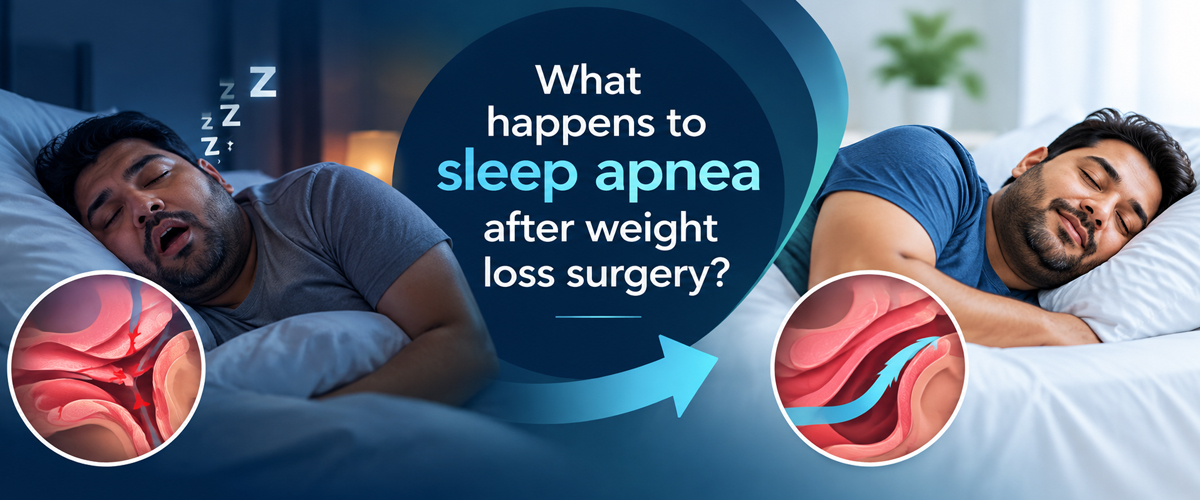
So when you lose weight, the airway mechanics can improve. Your body also becomes less stressed overall. That combination is why we often see OSA improve after weight loss.
What happens after weight loss surgery for sleep apnea?
Weight loss surgery (bariatric surgery) is not a sleep apnea surgery. It does not reshape the airway like ENT procedures do.
But it often changes the conditions that make OSA severe.
1) Apnea severity often improves, sometimes a lot
After weight loss surgery for sleep apnea, many patients see big improvements in:
- Snoring
- Nighttime choking episodes
- Oxygen dips
- Daytime sleepiness
- Blood pressure control
In clinical terms, the AHI (apnea hypopnea index, number of events per hour) often goes down.
Some people eventually no longer meet criteria for sleep apnea. Others still have it, but milder. And some still need CPAP, just at different settings.
The key point is this:
Most people improve with weight loss surgery for sleep apnea. Not everyone is “cured.”
2) Your CPAP pressure needs can change after bariatric surgery
After significant weight loss, the pressure that used to keep your airway open may become too high or simply not optimal. That can cause:
- Mask leaks
- Dry mouth, aerophagia (air swallowing, bloating)
- Discomfort and poor adherence
On the flip side, stopping CPAP too early is common and risky. People feel better and assume the apnea is gone. But OSA can still be present without obvious symptoms.
You may still have apnea even after big weight loss
This part surprises people and honestly it can feel unfair.
OSA can persist due to:
- Jaw structure or a naturally narrow airway
- Enlarged tonsils, tongue size, soft palate anatomy
- Nasal obstruction
- Age related changes in airway tone
- Family history
- Remaining weight or central obesity
- Sleep position (back sleeping)
- Alcohol or sedative use
- Coexisting conditions like hypothyroidism
So if you lose 25 percent, 30 percent, even more, and you still need CPAP, it does not mean weight loss surgery for sleep apnea “failed.” It just means your apnea is not only about weight.
Which weight loss surgery for sleep apnea makes the biggest difference?
Most commonly, sleep apnea improves after the procedures that lead to the most consistent and sustained weight loss, plus strong metabolic improvement.
That includes:
Sleeve Gastrectomy for sleep apnea
A popular option. It reduces stomach size and helps reduce hunger signals. Many patients see major improvements in OSA as weight comes down.
Roux-en-Y Gastric Bypass for sleep apnea
Often used when there is significant reflux, diabetes, or certain metabolic patterns. It can lead to strong metabolic improvements, which may indirectly improve sleep quality and cardiometabolic risk.
Mini Gastric Bypass / One Anastomosis Gastric Bypass
Used in certain practices and patient profiles. Outcomes depend on individual selection and follow up.
The best weight loss surgery for sleep apnea is not “the one that cures it.” It is the one that fits your overall health picture, weight goals, diabetes status, reflux, eating patterns, and surgical risk profile.
A bariatric team that works with metabolic health all the time will usually take sleep apnea into account during planning, anesthesia, and follow up.
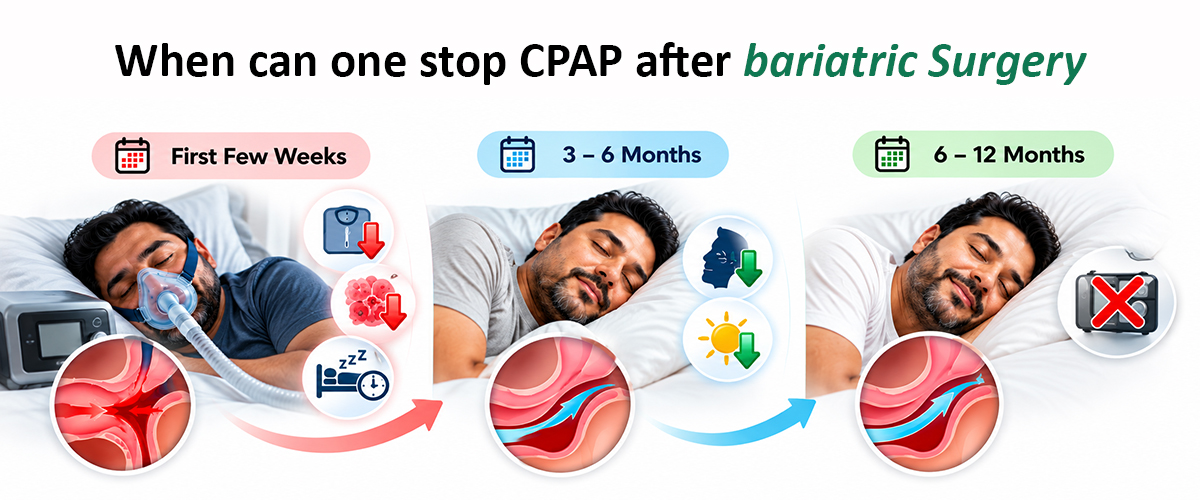
When can one stop CPAP after bariatric Surgery
First few weeks after surgery
- Weight loss begins quickly
- Inflammation can change
- Sleep may still be disrupted due to recovery, pain, new eating schedule, and adjusting to life post op
3 to 6 months
- Many people notice less snoring and less daytime sleepiness
- CPAP may feel “too strong” or uncomfortable if pressures are no longer ideal
Still, this is usually not the time to declare sleep apnea gone.
6 to 12 months
This is when weight loss and metabolic improvements are more stable, and it becomes more reasonable to reassess with a sleep study.
The safest way to handle CPAP after bariatric surgery
Here is the simplest, safest mindset:
CPAP is not a punishment. It is protection while your body changes.
A practical plan many teams use:
- Continue CPAP after surgery unless your sleep specialist tells you otherwise.
- Track symptoms, but do not rely on symptoms alone.
- Some people adapt to low oxygen and fragmented sleep and stop noticing it.
- Schedule follow up with your sleep doctor as weight drops.
- Repeat a sleep study before stopping CPAP.
- This might be an in lab study or a home sleep test, depending on your case.
If you use an auto CPAP device, it may adjust within a range, but even then, you still want medical oversight. Especially if you have heart disease, severe OSA history, pulmonary hypertension, or high blood pressure.
Why untreated sleep apnea matters even more around surgery
Weight loss surgery for sleep apnea patients is generally safe, especially in experienced hands, but sleep apnea needs respect because it affects:
- Airway management during anesthesia
- Oxygen levels after surgery
- Risk of respiratory complications
- Sensitivity to opioids and sedatives
- Post op monitoring needs
That is why a good bariatric clinic will ask about sleep apnea and CPAP use early, not as an afterthought.
What else improves, besides the apnea numbers?
Even when OSA is not fully gone, weight loss surgery for sleep apnea often improves the stuff that makes sleep apnea more dangerous.
Including:
- Blood pressure
- Insulin resistance and type 2 diabetes
- Triglycerides and HDL
- Fatty liver disease
- Inflammation markers
- Strain on the heart
So you may still have mild to moderate OSA but with a much better overall risk profile. That still matters.
What if your sleep apnea feels worse after surgery?
It is less common, but there are a few scenarios where people struggle more in the short term.
Poor sleep during recovery
Pain, nausea, reflux, changing routines, anxiety. Sleep can be messy for a bit.
Mask fit issues as your face changes
Weight loss can change facial structure and mask seal. You might need a different mask style or size.
Dehydration and dryness
Very common post op. CPAP air can add to mouth and nasal dryness. Humidification adjustments help.
Reflux
Some patients experience reflux changes after surgery depending on procedure and anatomy. Reflux can worsen sleep and mimic nighttime breathing discomfort.
Do people ever come off CPAP completely?
Yes. Some people come off CPAP completely after weight loss surgery for sleep apnea, especially if:
- Their OSA was mainly weight driven
- They lose a substantial amount of weight and maintain it
- They do not have strong anatomic risk factors
- They sleep mainly on their side
- They avoid alcohol close to bedtime
- They improve nasal breathing and fitness
What to do right now if you have sleep apnea and are considering weight loss surgery
A simple checklist that actually helps:
- Know your baseline
- If you have a sleep study report, keep it. Know your AHI and oxygen nadir if possible.
- Use CPAP consistently before surgery
- It can improve blood pressure control and reduce anesthesia risk.
- Bring your CPAP to the hospital if instructed
- Many hospitals want you to have your own device and mask.
- Plan for follow up
- Expect that settings might change as you lose weight.
- Do not self discontinue
- Repeat testing is your friend here.
Where CODSILS fits in (if you want a structured plan)
If you are in that spot where you have obesity plus sleep apnea, and you are trying to figure out whether weight loss surgery for sleep apnea makes sense for you, it helps to talk with a team that does metabolic care all day long, not occasionally.
CODSILS (www.codsils.com) focuses on obesity, diabetes and metabolic care, and minimally invasive bariatric surgery. If you are considering a procedure and want a clear, medically grounded plan that includes how conditions like sleep apnea typically change after weight loss, you can explore their patient resources and consider booking a consultation through the site.
FAQs (Frequently Asked Questions)
01 – What is obstructive sleep apnea (OSA) and how does it affect me?
Obstructive sleep apnea (OSA) occurs when the throat repeatedly collapses during sleep, causing airflow to drop or stop. This leads to oxygen dips and brief awakenings that you might not remember but that disrupt your sleep. Common signs include loud snoring with pauses or gasping, morning headaches, dry mouth, waking up unrefreshed, daytime sleepiness, brain fog, mood issues, and hard-to-control high blood pressure.
02 – How does obesity worsen obstructive sleep apnea?
Obesity worsens OSA by adding extra soft tissue around the neck and throat that narrows the airway, increasing fat around the abdomen and chest which reduces lung volume when lying down, causing inflammation and fluid shifts that narrow airways at night, and contributing to metabolic issues like insulin resistance and high blood pressure that raise health risks when OSA is untreated.
03 – Can weight loss surgery improve my sleep apnea?
Yes. While weight loss surgery for sleep apnea doesn’t reshape the airway like ENT procedures, it often leads to significant weight loss and metabolic improvements that reduce the severity of OSA. Many patients experience less snoring, fewer choking episodes at night, improved oxygen levels, reduced daytime sleepiness, and better blood pressure control. However, not everyone is completely cured; some may still need CPAP therapy.
04 – Should I adjust my CPAP settings after bariatric surgery?
No. After significant weight loss from surgery, your CPAP pressure needs may change but you should not self-adjust settings. Using too high a pressure can cause discomfort like mask leaks or dry mouth. It’s important to continue using CPAP as prescribed and consult your sleep specialist for reassessment and possibly repeat sleep studies to optimize your therapy.
05 – Why might I still have sleep apnea even after losing a lot of weight?
Sleep apnea can persist due to factors beyond weight such as jaw structure, naturally narrow airway anatomy, enlarged tonsils or tongue size, nasal obstruction, age-related changes in airway tone, family history, remaining central obesity, sleeping position, alcohol or sedative use, or coexisting conditions like hypothyroidism.
06 – Which type of weight loss surgery for sleep apnea is most effective?
Sleeve Gastrectomy is popular for reducing stomach size and hunger signals leading to major OSA improvements as weight decreases. Roux-en-Y Gastric Bypass offers strong metabolic benefits helpful for reflux or diabetes alongside OSA improvement. Mini Gastric Bypass/One Anastomosis Gastric Bypass may be used selectively. The best procedure depends on your overall health profile including weight goals, diabetes status, reflux issues, eating patterns.
