



09 Sep Acid Reflux After Gastric Sleeve Surgery
You got a sleeve gastrectomy as treatment of obesity and to feel lighter, healthier, more in control. But some patient may develop acid reflux after gastric sleeve.
Sometimes it’s mild and temporary. Sometimes it’s that burning feeling that keeps you up at night, makes you cough, or turns every meal into a little gamble.
Reflux after sleeve can be normal-ish in the early recovery phase but few patients may have it later also.
If you’re reading this on CODSILS (www.codsils.com), this is the same stuff we discuss in consults with patients who are recovering and unsure if what they’re feeling is “normal healing” or a real complication. The goal is to help you catch the important stuff early.
First, what acid reflux after sleeve actually is ?
Acid reflux is when stomach contents move upward into the esophagus. That backflow can be acidic, irritating, and it can cause symptoms like:
- Burning in the chest or throat (heartburn)
- Sour taste in the mouth
- Regurgitation of food or fluid
- Nausea that feels worse after eating
- Burping, bloating, pressure in upper abdomen
- Cough, throat clearing, hoarseness, “lump in throat”
- Worse symptoms at night or when bending forward
Some people don’t feel classic heartburn at all. They just have chronic cough, throat irritation, or chest tightness. That can still be reflux.
Why reflux can happen after sleeve gastrectomy
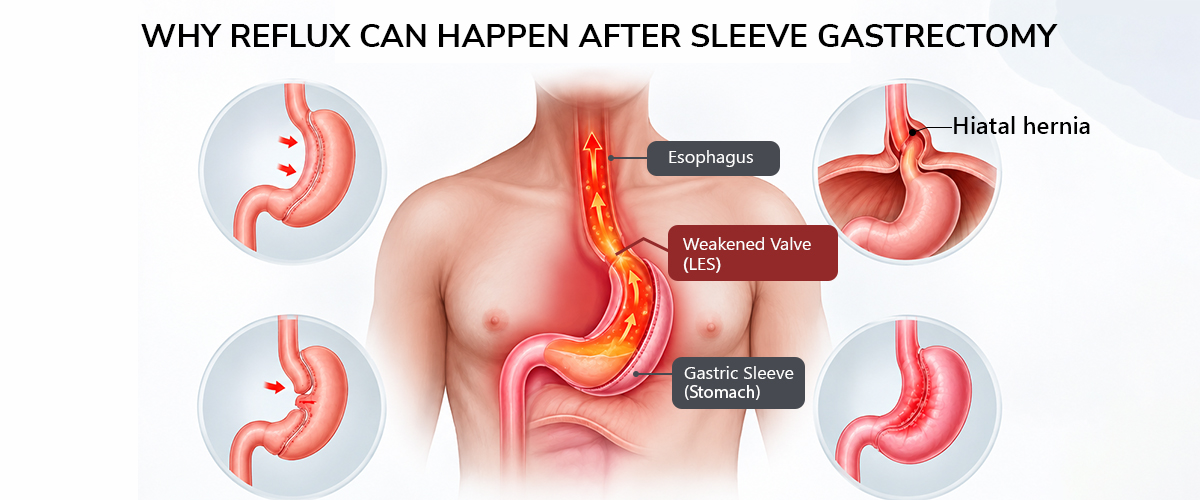
Here are common reasons reflux shows up after sleeve:
1) The new stomach is higher pressure
A sleeve is a narrow channel. When you eat, pressure rises faster. If the valve at the top (lower esophageal sphincter) is weak, pressure can push contents upward more easily.
2) The sleeve shape can be slightly tight in one area
If there’s a narrowing, twist, or functional “kink” in the sleeve, food and liquid can hesitate and back up. That increases pressure and can trigger reflux and regurgitation.
3) Hiatal hernia might be present or develop
A hiatal hernia is when part of the stomach slides up into the chest through the diaphragm opening. It can worsen reflux.
4) Swelling early on can mimic reflux
In the first weeks after surgery, inflammation and swelling are normal. It can create a temporary feeling of reflux, chest pressure, or “stuck” sensation. This is one reason many surgeons prescribe acid suppression right away.
5) Eating and drinking patterns change
Eating too fast, too much, too dry, too spicy, drinking with meals, or lying down too soon after eating. These can all trigger reflux, even if the sleeve itself is perfectly fine.
6) Some people had GERD before surgery
If you already had significant GERD before sleeve, the sleeve may not be the reflux friendly choice for you long term.
So yes, reflux can be “expected” early. But persistent or worsening reflux deserves attention. Especially if it’s new, severe, or comes with other symptoms.
What’s normal reflux after sleeve, and what’s not
Usually normal-ish (especially early) looks like:
- Mild heartburn that improves with prescribed PPI medication
- Symptoms mostly tied to specific triggers (spicy food, coffee, eating late)
- Symptoms that gradually improve over the first 6 to 12 weeks
- No trouble swallowing, no repeated vomiting, no dehydration
Not normal, “needs evaluation” looks like:
- Reflux that is getting worse, not better, after the initial healing phase
- Reflux that wakes you up at night repeatedly
- Regurgitation of bitter fluid or food several times a week
- Needing higher and higher doses of meds just to function
- New cough, wheeze, hoarseness, sore throat that doesn’t go away
- Trouble swallowing or feeling like food sticks
- Frequent vomiting, dehydration, or inability to meet protein and fluid goals
Acid reflux after sleeve: the red flags you should not ignore
Here are the situations where reflux is not just reflux. It might be a sign of a complication, a sleeve-related mechanical issue, or significant GERD that can damage the esophagus over time.
Red flag 1: You can’t keep fluids down
If you are vomiting frequently, or even “spitting up” liquids and you can’t meet hydration, that’s urgent.
Dehydration after bariatric surgery can sneak up fast. Dark urine, dizziness, rapid heart rate, weakness, headache. If reflux is preventing you from drinking, don’t wait it out.
Red flag 2: Progressive difficulty swallowing (dysphagia)
A little “learning curve” with swallowing early on can happen.
But if swallowing gets harder week by week, or you feel consistent sticking in the chest, that can point to a narrowing, stricture, twist, or functional obstruction.
Red flag 3: Severe chest pain (especially with shortness of breath)
Heartburn can feel intense. But severe chest pain should never be assumed to be reflux, particularly if it’s new, crushing, radiating, or associated with breathlessness, sweating, or fainting.
Rule out cardiac and pulmonary causes first. Always.
And if it’s post-op and you also have fever, rapid heart rate, or feel very unwell, your surgeon needs to know right away.
Red flag 4: Reflux that starts months after surgery and keeps escalating
Early reflux can be swelling, diet, adaptation.
But reflux that begins later, or suddenly worsens after being fine for a while, raises suspicion for:
- Hiatal hernia issues
- Sleeve dilation over time
- Sleeve shape problems becoming symptomatic
- Weight regain patterns and diet changes
- Severe GERD developing as a chronic condition
Red flag 5: Nighttime choking, coughing, or aspiration symptoms
If you wake up coughing, choking, with sour fluid in your throat, that suggests reflux is reaching high enough to risk aspiration.
That’s a big deal. Chronic aspiration can irritate the lungs and throat, cause recurrent infections, worsen asthma-like symptoms, and wreck sleep.
Red flag 6: Vomiting with reflux, especially after small amounts of food
If every meal leads to vomiting or regurgitation, even small portions, that’s not typical GERD.
That can suggest functional obstruction, sleeve stenosis, twist, or a problem with gastric emptying.
Red flag 7: Blood, black stools, or anaemia symptoms
Any sign of gastrointestinal bleeding needs urgent assessment. That includes:
- Vomiting blood
- Coffee-ground vomit
- Black tarry stools
- New fatigue, dizziness, pale skin
Reflux itself can irritate the esophagus. Over time, severe inflammation can cause erosions. But bleeding is not something to brush off.
Red flag 8: Reflux that does not respond to PPIs at all
PPIs help many people. If they do nothing, either the diagnosis isn’t simple acid reflux, or there is a mechanical driver that medication cannot solve.
This is where your team might consider imaging or endoscopy rather than trying a third medication.
Why it matters: reflux is not just “discomfort”
Ongoing GERD isn’t only annoying. It can cause:
- Esophagitis (inflammation of the esophagus)
- Ulceration
- Strictures (narrowing) over time
- Barrett’s esophagus (precancerous change in some chronic cases)
- Poor sleep, chronic cough, voice issues
- Reduced intake leading to malnutrition or dehydration
- Food avoidance and poor quality of life

What you can do at home
If your symptoms are mild and you’re early in the process, these changes often make a noticeable difference.
Eating habits
- Eat slower than you think you need to. Then slower.
- Take smaller bites. Chew until it’s basically paste.
- Stop at the first sign of pressure in the upper chest.
- Avoid overeating, even if it’s “healthy food.”
- Avoid drinking with meals (follow your surgeon’s guidance, often no fluids 30 minutes before and after meals).
- Do not lie down after eating. Give it at least 2 to 3 hours.
Trigger foods and drinks (common culprits)
Not everyone reacts to the same stuff, but these are frequent triggers:
- Coffee, strong tea
- Chocolate
- Mint
- Tomato sauces
- Citrus
- Fried foods, high fat meals
- Very spicy foods
- Carbonated drinks
- Alcohol
Also. Some protein shakes can trigger reflux. Especially if they’re too sweet, too thick, or you’re drinking them too fast.
Sleeping position
- Elevate the head of the bed (pillows often aren’t enough, the angle matters)
- Sleep on your left side if reflux is worse at night (this helps some people)
Medications
Many patients are prescribed:
- PPIs like omeprazole, pantoprazole, esomeprazole
- Sometimes H2 blockers like famotidine
- Occasionally antacids for breakthrough symptoms
Don’t self-adjust long-term without talking to your bariatric team. Especially if you’re taking NSAIDs or other medications that can irritate the stomach lining.
When your surgeon will likely investigate further
If reflux persists, worsens, or comes with red flags, your surgeon might recommend tests like:
- Upper GI contrast study (to see sleeve shape, narrowing, twisting, hernia)
- Endoscopy (to look for esophagitis, ulcers, strictures, bile reflux, anatomy issues)
- pH study or impedance testing (in select cases, to quantify reflux)
- Manometry (to assess esophageal motility if swallowing issues aresignificant)
This is not overkill. It’s just being precise about what’s actually happening.
Treatment options when reflux is more than mild
This depends on the cause.
If it’s mostly lifestyle and acid
Many patients improve with:
- Consistent PPI course (not on and off)
- Food timing and portion changes
- Weight loss progression and reduced abdominal pressure
If it’s a hiatal hernia
A repair may be needed, depending on size and symptoms. Some patients had a small hernia missed on pre-op tests, or it changed after surgery.
If the sleeve has a narrowing, twist, or functional obstruction
Sometimes endoscopic dilation is considered. Sometimes surgical revision is needed. The right answer depends on anatomy and severity.
If reflux is severe and persistent (despite meds)
In some cases, conversion to a Roux-en-Y gastric bypass is discussed because bypass is generally more reflux-protective than sleeve. This is a big decision, not a quick fix. But for the right patient, it can be life changing in a good way.
The main point is. You do have options. You’re not stuck.
A quick timeline guide (rough, but useful)
Every surgeon has their own protocol, but as a general idea:
- First 2 to 6 weeks: reflux can be related to swelling, liquid diets, healing, learning new eating mechanics.
- 6 to 12 weeks: symptoms should usually be improving with correct habits and medication.
- 3 to 6 months+: persistent reflux, worsening symptoms, nighttime symptoms, or regurgitation should be taken seriously and investigated.
When to contact your bariatric team right now
Call your surgeon or clinic promptly if you have:
- Inability to keep fluids down
- Repeated vomiting
- Signs of dehydration
- Progressive swallowing difficulty
- Severe chest pain
- Fever, rapid heart rate, feeling very unwell
- Nighttime choking or aspiration symptoms
- Blood in vomit or black stools
If you’re a patient of CODSILS, or you’re considering evaluation, you can book a consult through www.codsils.com. Even if you had surgery elsewhere, a focused reflux evaluation can help you understand whether this is diet, medication, anatomy, or something that needs intervention.
The annoying truth (and the comforting one)
The annoying truth is reflux after sleeve is common enough that it gets normalized. People shrug and say, yeah sleeve reflux, take a tablet.
The comforting truth is you don’t have to accept it as your new normal.
Most mild reflux improves. And when it doesn’t, it usually has a reason. A real reason. And once you identify that, treatment becomes much more direct.
If you’re feeling stuck in the cycle of burning, coughing, regurgitating, sleeping badly, eating nervously. That’s the moment to stop guessing.
Get it assessed properly. That’s not being dramatic. That’s protecting your esophagus, your nutrition, and your quality of life.
FAQs (Frequently Asked Questions)
Acid reflux after sleeve gastrectomy occurs when stomach contents flow back up into the esophagus, causing symptoms like burning in the chest or throat (heartburn), sour taste in the mouth, regurgitation of food or fluid, nausea after eating, burping, bloating, pressure in the upper abdomen, cough, throat clearing, hoarseness, and worse symptoms at night or when bending forward.
01 – What are common causes of acid reflux specifically linked to sleeve gastrectomy?
Common causes include increased pressure in the narrow tubular stomach leading to backflow; structural issues such as narrowing or kinks in the sleeve; hiatal hernia that may worsen reflux; postoperative swelling causing temporary reflux-like symptoms; eating and drinking patterns that trigger reflux (e.g., eating too fast or lying down after meals); and pre-existing GERD that migh not improve with sleeve surgery.
02 – How can I tell if my acid reflux symptoms after sleeve gastrectomy are normal or require medical evaluation?
Normal reflux symptoms are usually mild heartburn improving with prescribed medications (PPIs), tied to specific triggers like spicy food or coffee, gradually improving over 6 to 12 weeks without trouble swallowing or vomiting. Symptoms needing evaluation include worsening reflux beyond initial healing phase, frequent nighttime awakenings due to reflux, regurgitation several times a week, needing increasing medication doses,new persistent cough or hoarseness, difficulty swallowing or feeling food stuck, frequent vomiting, dehydration, or inability to meet protein and fluid goals.
03 – What are the red flags indicating serious complications from acid reflux after sleeve gastrectomy?
Red flags include inability to keep fluids down due to frequent vomiting or spitting up liquids leading to dehydration; worsening symptoms despite medication; persistent chest pain; significant difficulty swallowing; repeated vomiting; signs of dehydration such as dark urine; new respiratory symptoms like wheezing or sore throat that do not resolve; all of which warrant immediate contact with your bariatric care team.
04 – What steps can I take at home to manage mild acid reflux after my sleeve gastrectomy?
To manage mild reflux at home: follow prescribed acid suppression medications (PPIs); avoid known dietary triggers such as spicy foods and coffee; eat smaller meals slowly; avoid lying down immediately after eating; maintain proper hydration between meals rather than during meals; monitor symptoms closely for improvement over time; and communicate any worsening or new symptoms promptly with your bariatric team.
