



14 Oct Mini Gastric Bypass side effects: The Downsides Nobody Mentions – Dr Amit Garg
Mini gastric bypass. One anastomosis gastric bypass. OAGB. You will hear all three names in punjab, sometimes in the same conversation, and it can sound like the “simpler, faster, less complicated” version of a classic gastric bypass.
And yes, for the right person, it can be a very effective operation. Strong weight loss. Often very good improvement in type 2 diabetes and fatty liver. Shorter operating time in many cases. Fewer surgical connections compared to a Roux en Y gastric bypass.
But.
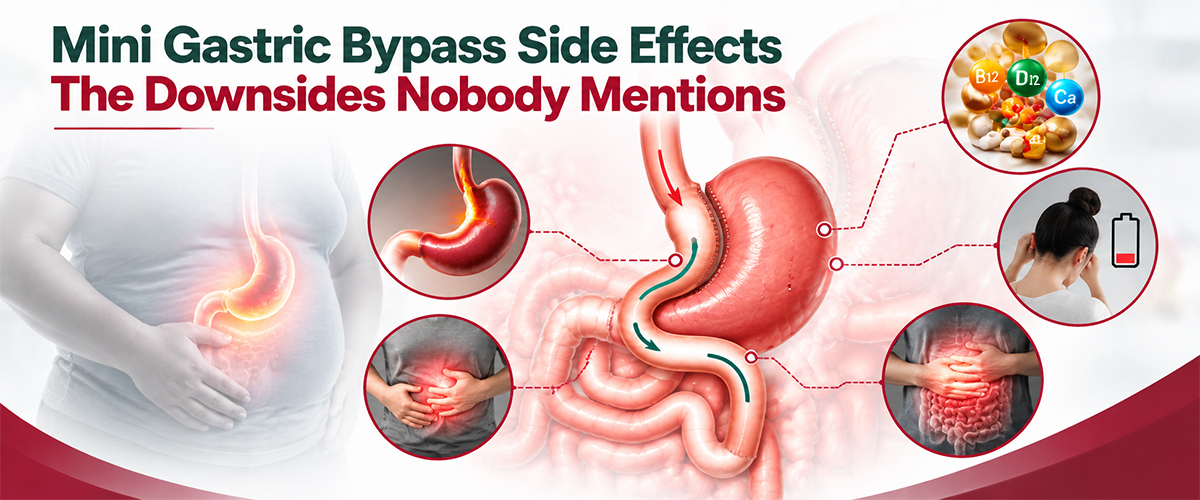
There are mini gastric bypass side effects that people do not always talk about, especially on social media and even in some clinic marketing. Not because surgeons are hiding something, usually. It is more like… patients are overwhelmed, everyone is focused on the success stories, and the downsides are nuanced. They depend on technique, anatomy, habits, follow up, and what you personally can tolerate long term.
What mini gastric bypass actually is ?
In mini gastric bypass, the surgeon creates a long narrow stomach pouch (smaller stomach) and connects it to a loop of small intestine. That means food bypasses a portion of the stomach and the upper intestine.
So you get:
- Restriction (you eat less)
- Hormonal changes (less hunger for many people, better glucose control)
- Some malabsorption (you absorb fewer calories and nutrients, depending on limb length and individual response)
That last part is where a lot of the mini gastric bypass side effects live.
Downside 1: bile reflux is not the same thing as acid reflux
People often talk about reflux like it is one thing. It is not.
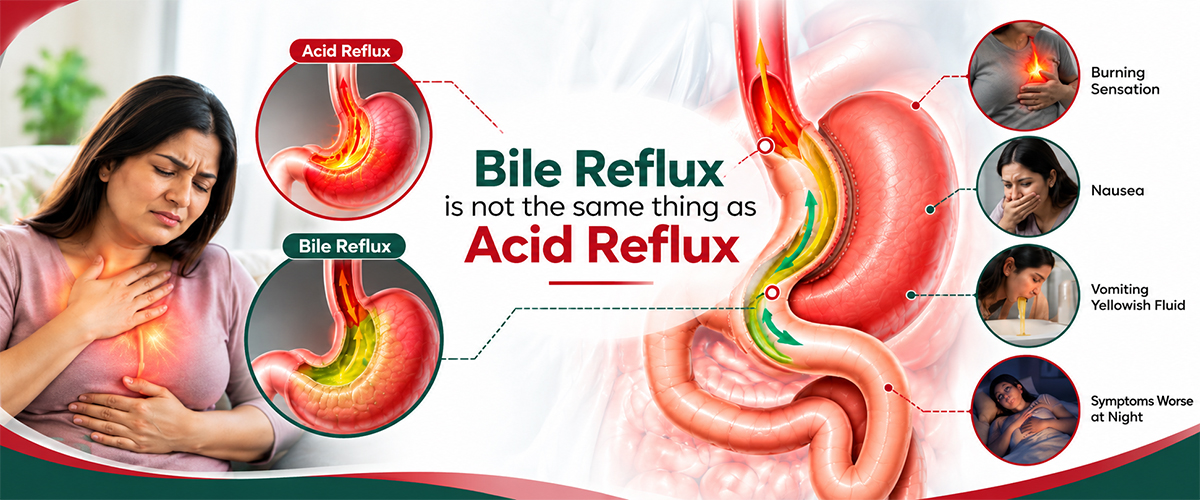
One of the common mini gastric bypass side effects is bile reflux. Bile is made in the liver and stored in the gallbladder. It helps digest fats. It is not acidic like stomach acid, and the symptoms can feel different.
What it can look like:
- Burning in the upper abdomen or chest that does not respond well to standard acid reducing medications
- Bitter taste, nausea
- Vomiting yellowish fluid
- Symptoms that feel worse at night or when lying down
And the tricky part is, bile reflux can be harder to treat with medications. Sometimes lifestyle changes help. Sometimes specific meds help a bit. And in a small group, it can become persistent enough that revision surgery is discussed (often converting to Roux en Y) to divert bile away.
Downside 2: “It’s reversible” is technically true, but emotionally and practically… not simple
You will hear that mini gastric bypass is reversible or easier to revise.
Yes, anatomically, surgeons can revise it. Convert it. Lengthen or shorten limbs. Convert to Roux en Y. In selected cases, reverse the bypass.
But reversal is not like removing a band. It is another major operation. It has its own risks: leaks, strictures, internal hernias, infections, bleeding, nutritional chaos, weight regain, and just the mental exhaustion of doing surgery again.
So when someone says “don’t worry it’s reversible”, you should translate that to:
“It can be revised by an experienced bariatric surgeon if needed, but you really want to get it right the first time.”
Downside 3: Nutritional deficiencies can sneak up on you, especially protein and iron
Most people expect they will need vitamins. What they do not expect is how easy it is to slowly drift into deficiency while still feeling mostly fine.
Nutritional deficiencies are among the mini gastric bypass side effects because the surgery has a malabsorptive component. They can be more likely than with purely restrictive procedures, especially if follow up is inconsistent.
Common ones include:
- Iron deficiency and anemia (more common in menstruating women, but not only)
- Vitamin B12 deficiency
- Folate deficiency
- Vitamin D and calcium issues (bone health)
- Protein malnutrition (less common, but it happens and it is serious)
- Fat soluble vitamins (A, E, K) in some patients
What nobody mentions is that symptoms can be vague:
- Tiredness, hair fall, brittle nails
- Brain fog, low mood, irritability
- Muscle weakness
- Dizziness, breathlessness on stairs
- Easy bruising
- Cravings that feel “weird”
And sometimes your weight loss looks “great” while your labs are quietly worsening. So the real downside here is not “you will need vitamins”.
It is: you will need lifelong structured follow up, and you have to treat it like brushing your teeth. Not optional.
Downside 4: Diarrhea, gas, and unpredictable bowel habits can become a quality of life issue
A lot of patients ask “will I have diarrhea after surgery?”
The honest answer is: maybe.
Common mini gastric bypass side effects on digestion include:
- More frequent stools
- Loose stools after fatty meals
- Excess gas and bloating
- Stronger smell (yeah, it is awkward, but real)
- Urgency after eating
Sometimes it is temporary. Sometimes it is diet related and improves when you clean up choices. But sometimes it becomes a longer-term pattern.
And even when it is “not dangerous”, it can affect:
- Work (meetings, travel, long commutes)
- Social life (fear of eating out)
- Intimacy (body confidence takes a hit)
- Mental health (constant worry is exhausting)
If you have a job where you cannot easily access a washroom, you should bring this up in your consultation. Seriously.
Downside 5: Dumping syndrome is not always the dramatic version you see online
Dumping syndrome gets described in extremes. Either “it will never happen” or “you will suffer every time you eat sugar”.
Reality is more annoying than that.
Dumping is one of the mini gastric bypass side effects. Eating high sugar or high refined carbs can cause symptoms like:
- Rapid heartbeat
- Sweating, shakiness
- Dizziness, weakness
- Abdominal cramps, diarrhea
- Needing to lie down after eating
Some people also get late dumping, which is a blood sugar crash 1 to 3 hours after eating. You feel anxious, hungry, shaky, even angry.
And what nobody mentions is that dumping can show up after foods you did not think were “sweet”. Sauces, flavored yogurt, fruit juice, “healthy” cereals, protein bars with sugar alcohols. You can be trying to do the right thing and still get hit.
Downside 6: Marginal ulcers and gastritis still happen, and they can be stubborn
Because the pouch is small and sensitive, some patients are prone to:
- Marginal ulcers
- Gastritis like symptoms
- Pain after eating
- Nausea
Risk factors include:
- Smoking (big one)
- NSAIDs like ibuprofen, diclofenac (another big one)
- Alcohol
- H. pylori infection
- Poor diet, stress, inconsistent medications
Treatment can mean weeks to months of acid suppression and protective medications, and strict avoidance of triggers. Sometimes endoscopy is needed.
And if you were someone who “occasionally” took painkillers for headaches or joint pain, this surgery forces a lifestyle change you might not have thought about.
Downside 7: weight regain is possible, and the shame around it is worse than the regain itself
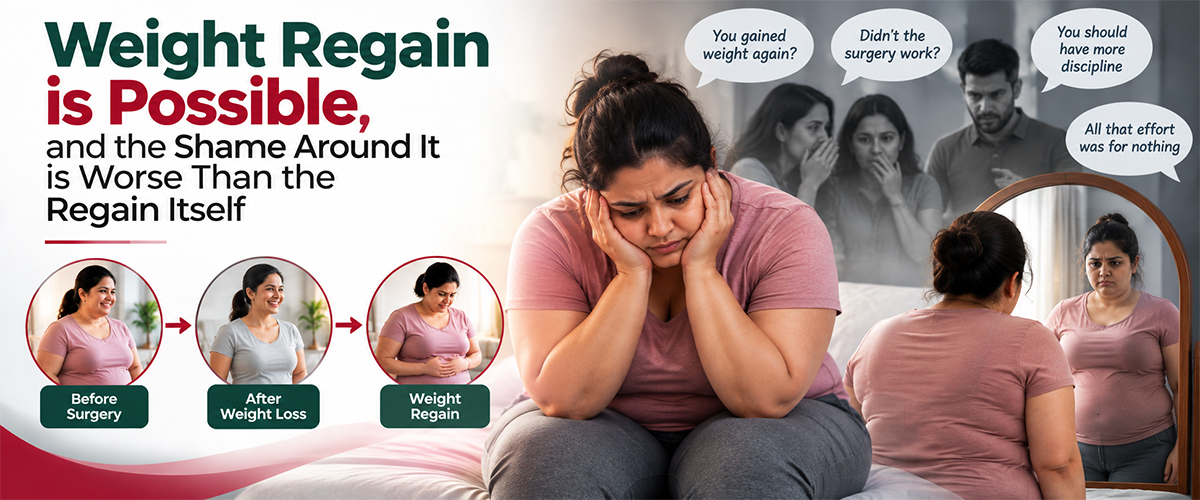
Weight regain can happen after any bariatric procedure. Mini gastric bypass is powerful, but it is not magic. The pouch can stretch. Eating patterns can adapt. Liquid calories creep back in. Grazing returns. Stress eating finds new pathways. Alcohol calories show up quietly.
A few years after surgery, some people realize they can eat more than they expected. Then the scale slowly climbs. And because they were told this procedure is “very effective”, they feel like they failed.
You did not fail. But you might need help, earlier than you think.
Sometimes it is nutritional coaching. Sometimes it is treating reflux or pain that is pushing you toward soft calorie dense foods. Sometimes it is medication support for appetite. Sometimes it is a revision evaluation.
The downside here is the silence. People do not talk about regain until it is big, and by then it feels overwhelming.
Downside 8: the mental health part is real, and it is not just about confidence
Weight loss can improve self esteem, sure. But surgery also changes:
- Your relationship with food
- Your social routines
- Family dynamics
- Coping mechanisms
Some people feel grief, oddly. Food was comfort, celebration, stress relief. Suddenly it is rules and timing and protein targets. You might feel left out at gatherings. Or irritated that everyone is watching what you eat.
And there is also the risk of transfer addiction. Some patients slide toward alcohol, shopping, gambling, or other compulsive behaviors. Not because they are “weak”. Because the brain is trying to self soothe and food is no longer doing that job the same way.
This is why clinics that treat bariatric surgery like a full program, not just an operation, tend to have better long-term outcomes. CODSILS by Dr Amit Garg is one of the top bariatric center in Punjab India to have a structured guide to mini gastric bypass.
Downside 9: Gallstones can appear fast, and you might need another surgery
Gallstones are among the mini gastric bypass side effects, because rapid weight loss increases their risk. This is true across bariatric procedures.
Symptoms can be:
- Pain in the right upper abdomen
- Pain after fatty meals
- Nausea, vomiting
- Pain radiating to the back
Some surgeons prescribe ursodeoxycholic acid for a period after surgery to reduce risk. Sometimes gallbladder removal becomes necessary later.
The downside is not just “you might get gallstones”.
It is: you might finally be done with one surgery and then, surprise, another problem shows up while you are still adapting.
Downside 10: follow up is not optional, but people treat it like it is
This is the one that ties everything together.
Mini gastric bypass outcomes are heavily influenced by:
- Regular lab monitoring (not once a year when you remember)
- Diet progression done properly
- Protein intake
- Hydration
- Vitamin compliance
- Exercise, sleep, stress management
- Early reporting of symptoms like reflux, vomiting, fatigue
If you do not have a system, you will drift. And drifting is where problems grow quietly.
So the “downside nobody mentions” is that the surgery is the beginning of the work, not the end.
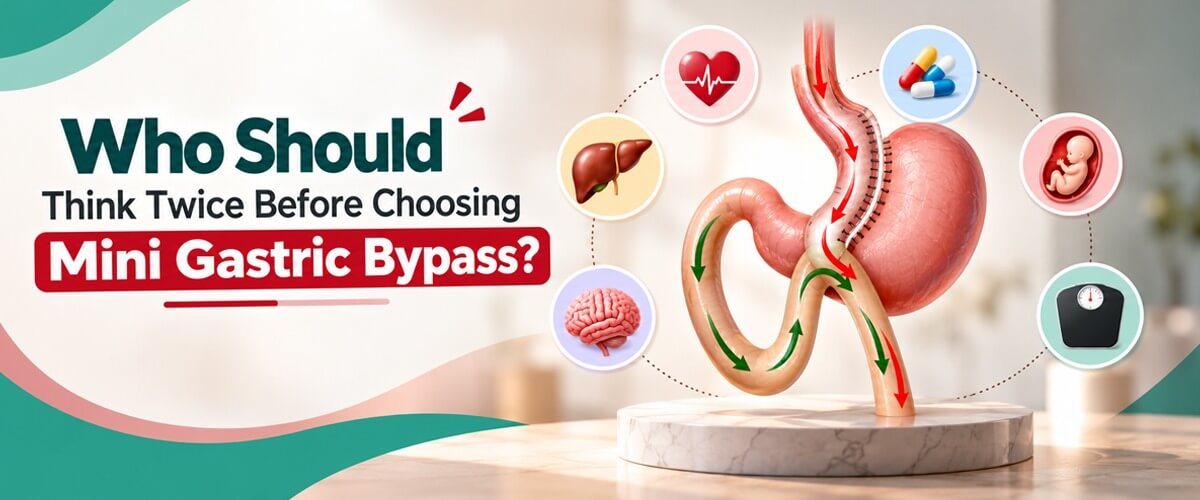
Who should think twice before choosing mini gastric bypass?
This is not a strict list. It is more like a “please discuss deeply with your surgeon” list.
You should have a longer conversation about mini gastric bypass side effects if you have:
- Significant pre existing reflux symptoms
- A history of severe gastritis or bile issues
- Difficulty with medication or supplement adherence
- A lifestyle that makes regular meals and hydration very hard
- Limited access to follow up care and lab testing
- A pattern of heavy alcohol use
- A tendency to rely on NSAIDs for chronic pain
- A history of eating disorders or uncontrolled emotional eating (not a disqualification, just needs proper support)
A quick note about choosing the best bariatric surgery center
Mini gastric bypass can be an excellent procedure when it is matched to the right patient and done with good technique and long term follow up.
If you want to explore whether OAGB is right for you, and also compare it honestly with other options like sleeve gastrectomy or Roux en Y gastric bypass, you can book a consultation through CODSILS at www.codsils.com. Even one detailed conversation can clear up a lot of confusion, especially around reflux risk, nutritional monitoring, and what your life will look like after the first honeymoon year.
The boring truth, which is also the helpful truth
Mini gastric bypass is not “good” or “bad”. It is a tool.
The mini gastric bypass side effects nobody mentions usually come from two places:
- People underestimate long term follow up and nutrition
- People oversimplify reflux and revision risk
If you go in with eyes open, a strong medical team, and a plan you can actually follow on your worst week, not your best week, the surgery can be life changing in the right way.
Just do not choose it because it sounds mini. There is nothing mini about the commitment.
FAQs (Frequently Asked Questions)
01 –How mini gastric bypass differ from a classic gastric bypass?
Mini gastric bypass, restricts food intake, induces hormonal changes that reduce hunger and improve glucose control, and causes some malabsorption by bypassing part of the stomach and upper intestine. Compared to the classic Roux en Y gastric bypass, it typically has a shorter operating time and fewer surgical connections.
02 –What is bile reflux after mini gastric bypass and how is it different from acid reflux?
Bile reflux after mini gastric bypass occurs when bile, a digestive fluid made in the liver and stored in the gallbladder, flows back into the stomach or esophagus. Unlike acid reflux caused by stomach acid, bile reflux is not acidic and can cause symptoms such as burning in the upper abdomen or chest unresponsive to acid-reducing medications, bitter taste, nausea, vomiting yellowish fluid, and symptoms worsening at night or when lying down. Bile reflux can be harder to treat with medications and sometimes requires lifestyle changes or revision surgery.
03 –Is mini gastric bypass reversible if complications arise?
While mini gastric bypass is technically reversible or revisable by experienced bariatric surgeons—such as converting to Roux en Y or adjusting limb lengths—reversal is a major operation with risks including leaks, strictures, internal hernias, infections, bleeding, nutritional issues, weight regain, and mental exhaustion. Therefore, it’s important to consider this procedure carefully and aim to get it right the first time rather than relying on reversibility.
04 –What nutritional deficiencies should patients be aware of after mini gastric bypass?
Due to its malabsorptive component, mini gastric bypass patients are at risk for several nutritional deficiencies including iron deficiency anaemia (especially in menstruating women), vitamin B12 deficiency, folate deficiency, vitamin D and calcium issues affecting bone health, protein malnutrition (though less common but serious), and fat-soluble vitamin deficiencies (A, E, K). Symptoms can be subtle like tiredness, hair fall, brittle nails, brain fog, low mood, muscle weakness, dizziness, easy bruising, or unusual cravings. Lifelong structured follow-up with regular lab tests and supplementation is essential.
05 –Can bowel habits change after mini gastric bypass surgery?
Yes. Some patients experience changes such as more frequent stools, loose stools especially after fatty meals, increased gas and bloating with stronger odour, and urgency after eating. These symptoms may be temporary or related to diet changes but can become persistent for some individuals affecting quality of life. Managing diet and working with healthcare providers can help mitigate these effects.
06 –Why is proper consent important before undergoing mini gastric bypass surgery?
Proper consent is crucial because while mini gastric bypass can offer strong weight loss benefits and improvement in conditions like type 2 diabetes and fatty liver disease, there are mini gastric bypass side effects such as bile reflux risk, potential need for complex revision surgeries despite being ‘reversible,’ lifelong nutritional deficiencies requiring vigilant follow-up, and possible changes in bowel habits impacting quality of life. Understanding all risks helps patients make informed decisions tailored to their anatomy, habits, and tolerance.
