

14 Oct Non-Surgical Weight loss Options in Mohali: Balloon vs CoolSculpting vs Diet – Dr Amit Garg
When people start searching for non-surgical weight loss options in Mohali, three things keep coming up.
- Diet and lifestyle changes (obviously)
- Intragastric balloon (often called “weight loss balloon”)
- CoolSculpting (fat freezing)
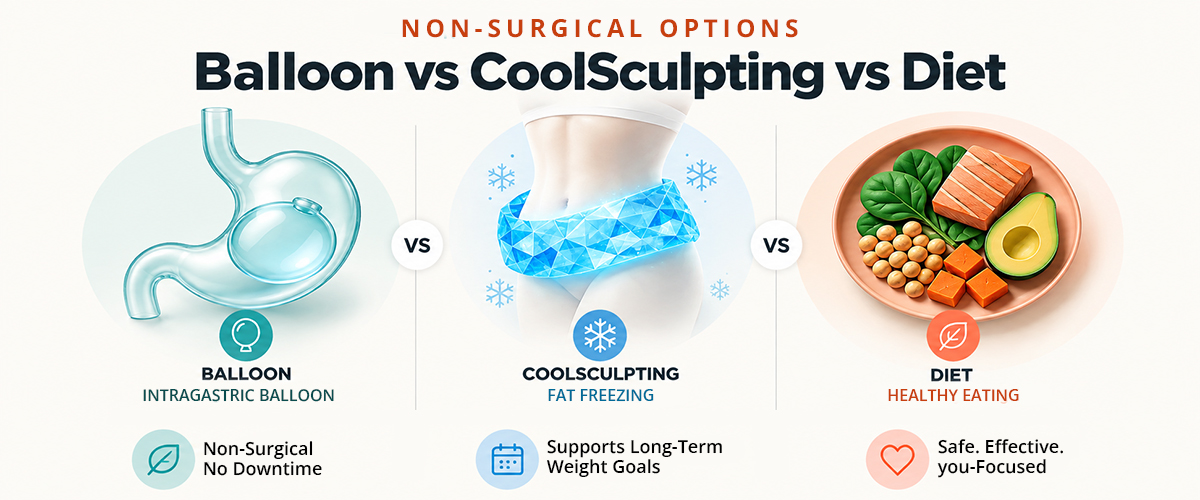
These non-surgical weight loss options sound like they belong in the same bucket. But they really do not. They solve different problems, for different bodies, with very different expectations.
What do you mean by “weight loss”?
This matters more than people think.
Some people want:
- Lower weight on the scale (total body weight reduction)
- Smaller waist and better metabolic health (blood sugar, fatty liver, triglycerides)
- Targeted inch loss in one area (belly pouch, love handles, under-chin)
- A reset and structure because motivation is gone
These are not the same goal.
Diet and balloons aim at actual weight loss and can improve metabolic markers.
CoolSculpting aims at body contouring, not real weight loss.
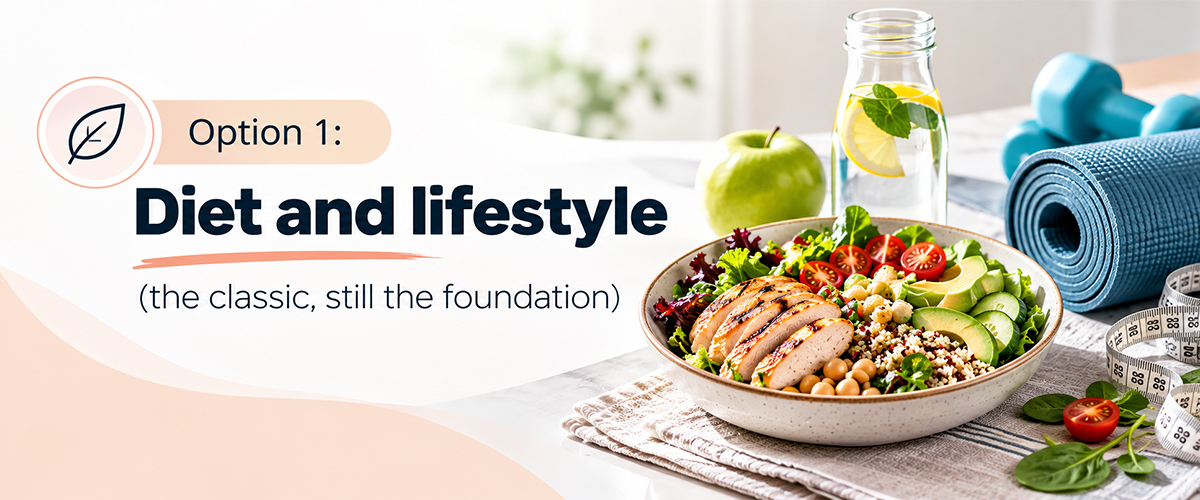
Option 1: Diet and lifestyle (the classic, still the foundation)
Among all non-surgical weight loss options, diet is not just “one option.” It is the base layer under everything else. Even if you do a balloon. Even if you do a procedure later. Diet is the engine.
What “diet” really means in a clinic setting
Most people picture diet as either:
- Eating salads and being miserable
- Cutting carbs completely
- Doing a plan for 2 weeks and then snapping back
A medical, structured approach is different. It usually includes:
- Calorie targets based on your weight, muscle mass, and schedule
- Protein goals (this is huge for satiety and preventing muscle loss)
- Planning around your triggers (late-night hunger, social meals, travel)
- Sleep and stress support, because cravings are not just willpower
- Tracking in a way you can actually maintain
For people with obesity, diabetes, insulin resistance, or metabolic syndrome, diet alone sometimes needs medical support and closer monitoring. Not because you are weak. Because the biology is loud.
Typical results with diet alone
It varies a lot, but realistically:
- Many people can lose 5 to 10 percent of body weight over months with a solid plan
- Some do much better, especially early on
- Many regain if the plan was too aggressive or unsustainable
And this is where people feel stuck. Not because diet never works, but because maintaining the loss long term is the real challenge.
Pros
- Lowest risk
- Lowest cost (in most cases)
- Improves health markers when done right
- Builds habits you need anyway
Cons
- Requires consistency, and the early hunger can be tough
- Slow for some people
- Results can plateau, especially if insulin resistance is significant
- Harder if you need a “kickstart” and structure
Diet is still the first thing to build, but it is not always enough on its own for significant obesity. That is when people look at tools like balloons.
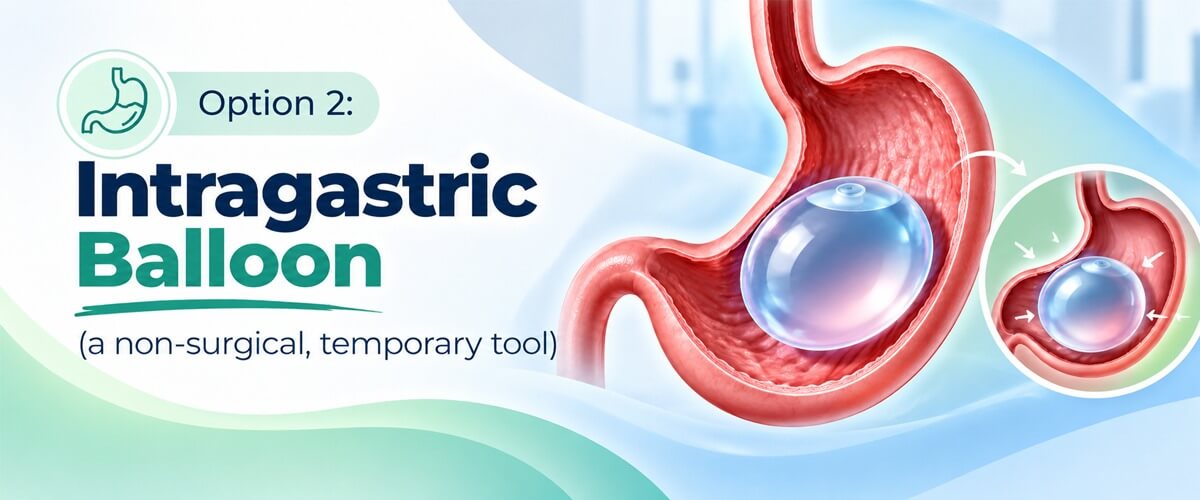
Option 2: Intragastric Balloon (a non-surgical, temporary tool)
A weight loss balloon is one of the most common non-surgical weight loss options for people who need more than “diet advice,” but are not ready for surgery. Or they want a middle step.
What it is (simple explanation)
An intragastric balloon is a soft balloon placed inside the stomach, then filled with saline. It partially occupies space in the stomach.
So you feel full faster. Portions become naturally smaller. Some cravings calm down because you are not constantly chasing volume.
What it is not
- It is not liposuction.
- It does not “melt fat.”
- It does not replace diet.
Who tends to benefit the most
Balloon tends to work best for people who:
- Have a BMI that usually sits in the overweight to obesity range (your doctor will guide exact suitability)
- Have tried dieting many times but struggle with hunger and portion control
- Need weight loss for health reasons (prediabetes, fatty liver, high BP, PCOS)
- Want a non-surgical, reversible option
- Need a bridge before surgery in some cases (to reduce risk)
Expected results (realistic)
Results depend heavily on adherence, but many people see meaningful weight loss over the balloon period, especially when paired with a structured nutrition program and follow ups.
But here is the honest bit. If you place a balloon and do not change eating behaviours, you can still out-eat it. People do. Soft calories go down easily. Milkshakes do not care about balloons.
What the experience feels like
The first few days can be uncomfortable. Many people experience:
- Nausea
- Cramping
- Reflux
- A “heavy” feeling
Pros
- Non-surgical
- Temporary and reversible
- Helps with portion control and early fullness
- Can lead to meaningful weight loss and metabolic improvements
- Provides structure and urgency that many people need
Cons
- Early side effects can be rough for some
- Requires follow ups and commitment to diet changes
- Not a permanent device, weight regain is possible if habits do not stick
- Not everyone is eligible (medical screening matters)
If you are considering a balloon, do it through a clinic that actually manages obesity and metabolic health, not a place that sells it like a product and disappears.
This is the kind of thing a specialized clinic like CODSILS by Dr Amit Garg focuses on. Not just the procedure itself, but the full support around it. Nutrition, monitoring, and picking the right option for the right person. You can explore more at www.codsils.com, and if you are unsure, a consultation can clarify whether balloon is even appropriate for your goals.
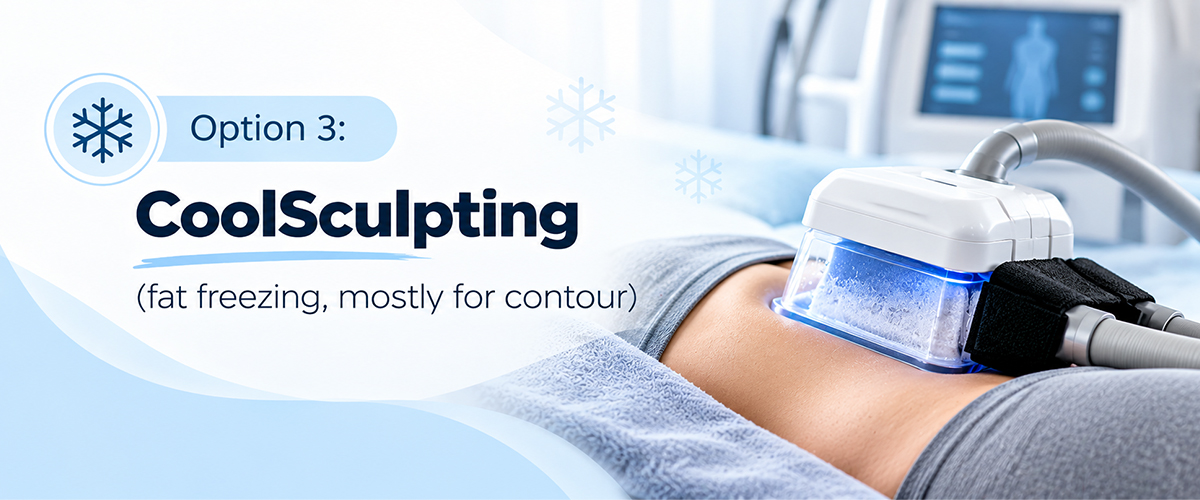
Option 3: Cool Sculpting (fat freezing, mostly for contour)
Cool Sculpting is popular because it sounds like weight loss without effort. And the marketing is everywhere.
But the key is understanding what it is designed to do.
What it is
CoolSculpting uses controlled cooling to target fat cells in a specific area. The idea is that cold exposure damages fat cells and the body gradually clears them over time.
It is spot treatment. Belly. Flanks. Thighs. Arms. Submental area. That kind of thing.
What it is not
CoolSculpting is not a treatment for obesity.
It is not intended for large, whole-body weight reduction.
If your goal is to drop 10, 20, 30 kg and improve diabetes risk, CoolSculpting is not the tool for that job.
Who it tends to help
CoolSculpting can make sense if you:
- Are close to your goal weight
- Have stubborn pockets of fat that do not respond well to training
- Want contouring, not major scale changes
- Can wait for gradual results (it can take weeks to months)
Expected results (realistic)
Most people should expect:
- Subtle to moderate reduction in fat thickness in the treated area
- Not a dramatic transformation unless the starting “problem area” is small and specific
- The number on the scale may barely move
Also, you often need multiple sessions for noticeable results, depending on the area and goal.
Pros
- Non-surgical
- No major downtime
- Targets specific areas
Cons
- Not for significant weight loss
- Can be expensive relative to the scale of change
- Results can be uneven if expectations are unrealistic
- Does not improve metabolic health in the way weight loss does
Balloon vs CoolSculpting vs Diet: the simplest comparison
If your main goal is: “I want to lose weight overall”
- Best starting point: Diet and lifestyle program
- Strong add-on if you need help: Balloon
- CoolSculpting: Not ideal as a weight loss strategy
If your main goal is: “I want to reduce belly fat in one area”
- Best fit: CoolSculpting, if you are near goal weight
- But: Diet still matters, because the belly usually responds to overall fat loss too
- Balloon: Usually overkill if you are only looking for small contour change
If your main goal is: “I want to improve sugar, BP, fatty liver”
- Best fit: Diet, and often medical weight management support
- Balloon: Can help, especially if you need a bigger push
- CoolSculpting: Not the tool for metabolic change
If your main struggle is hunger and portion control
- Diet alone: Possible, but often hard without structure
- Balloon: Specifically helps with early fullness and portion sizes
- CoolSculpting: Does nothing for appetite
What about safety and side effects?
This is where people get nervous, understandably.
Diet
Main “risk” is doing it badly. Crash diets can lead to:
- Muscle loss
- Binge cycles
- Nutrient deficiencies
- Gallstone risk with rapid loss in some people
A supervised plan avoids most of that.
Balloon
Possible issues include:
- Nausea and vomiting early on
- Reflux symptoms
- Rare complications that your doctor will screen and counsel you about
- Discomfort that may require medication and close follow up
It is still considered non-surgical, but it is a medical procedure and should be treated like one.
CoolSculpting
Possible issues include:
- Temporary numbness, bruising, discomfort
- Uneven results
- Rare but known complications (the provider should explain them clearly)
The bigger risk with CoolSculpting is not medical risk for most people. It is expectation risk. People do it expecting weight loss. Then feel disappointed.
Costs and value, the part nobody likes talking about
Costs of non-surgical weight loss options vary by city, provider, and your exact plan, so I will keep this general.
- Diet programs can range from low cost self-managed to structured clinic programs with follow ups.
- Balloons are a bigger upfront cost, but often include follow up support, nutrition plans, and monitoring if done properly.
- Cool Sculpting can add up fast because it is charged per area, and multiple sessions may be needed.
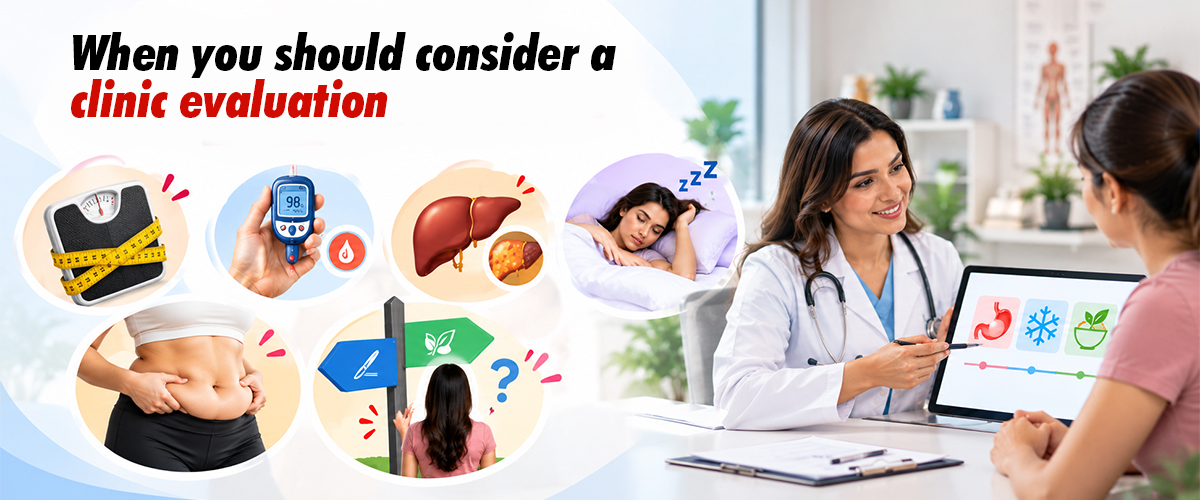
When you should consider a clinic evaluation
You should probably talk to a specialist if:
- Your BMI is in the obesity range and you have tried multiple times
- You have diabetes, prediabetes, fatty liver, PCOS, high BP, sleep apnea
- You lose weight and regain quickly, repeatedly
- You are considering a balloon and want to know if you are a good candidate
- You are confused about surgical vs non-surgical paths and want a straight answer
If you are looking for that kind of guidance, CODSILS focuses on obesity and metabolic care along with minimally invasive and bariatric options when needed. You can read more and request a consultation at www.codsils.com. If you want to explore your non-surgical weight loss options and figure out what is realistic for you, you can check CODSILS at www.codsils.com and book a consultation. Sometimes one good conversation saves months of trying the wrong thing.
FAQs (Frequently Asked Questions)
01 – What are the main non-surgical weight loss options available?
The three primary non-surgical weight loss options are diet and lifestyle changes, intragastric balloon (weight loss balloon), and CoolSculpting (fat freezing). Each serves different purposes and suits different goals and body types.
02 – How do diet and lifestyle changes contribute to weight loss?
Diet and lifestyle changes form the foundational approach to weight loss. A structured medical diet includes calorie targets, protein goals, managing hunger triggers, sleep and stress support, and sustainable tracking. Many people can lose 5 to 10 percent of body weight over months with consistent adherence, improving health markers in the process.
03 – What is an intragastric balloon and who is it best suited for?
An intragastric balloon is a soft balloon placed temporarily inside the stomach to occupy space, helping you feel full faster and reduce portion sizes. It’s ideal for individuals with overweight to obesity ranges who have struggled with hunger control through dieting alone, need weight loss for health reasons like prediabetes or PCOS, want a reversible non-surgical option, or require a bridge before surgery.
04 – Can CoolSculpting help with actual weight loss?
CoolSculpting focuses on body contouring by freezing fat in targeted areas but does not typically lead to significant weight loss or improvements in metabolic health markers. It is best suited for those seeking inch loss or reshaping specific body areas rather than total body weight reduction.
05 – What are realistic expectations when using an intragastric balloon for weight loss?
When combined with a structured nutrition program and follow-ups, many people experience meaningful weight loss during the 6 to 12 months the balloon is in place. However, it requires behavior change; without modifying eating habits, it’s possible to out-eat the balloon’s effect. The balloon acts as a tool within a comprehensive program rather than a magic solution.
06 – Why is defining your specific weight loss goal important before choosing a method?
Weight loss goals vary — some aim for lower scale weight, others for smaller waist size or better metabolic health, targeted inch loss, or simply a reset structure. Diet and balloons primarily target actual weight loss and metabolic improvements, while CoolSculpting focuses on body contouring. Knowing your goal helps select the most appropriate method with realistic expectations.
