

15 Oct Protein intake After weight loss Surgery
After Weight loss surgery in Punjab, food mechanic gets weird for a while. Your appetite changes, your portions shrink, and sometimes even the smell of certain foods feels… off. Yet your body is sitting there trying to heal tissue, close wounds, fight infection, and protect muscle at the same time.
Protein intake after bariatric surgery is basically the currency for all of that.
So when people ask how much protein intake after bariatric surgery they need, they usually want one simple number. But the honest answer is there are a few numbers that matter, and the right one depends on what surgery you had, your current weight, and where you are in recovery.
Why protein Intake after bariatric surgery matters more than calories?
Calories matter. Of course they do. But early post op, calories are almost always limited naturally because your intake is limited.
Protein intake after bariatric surgery is different. If it is too low, you can feel weak, lose muscle faster, heal slower, and your hair and skin can take a hit later on. Also, if you lose too much lean mass while losing weight, your metabolism tends to drop more than it needs to.
The core targets: the numbers most patients actually use
There are two ways most clinics set targets for protein intake after bariatric surgery:
- A simple daily gram goal
- A body weight-based goal
A good post-surgery plan often uses both. The simple goal gets you moving. The weight-based goal helps you fine tune.
The simple daily range for protein intake after bariatric surgery:
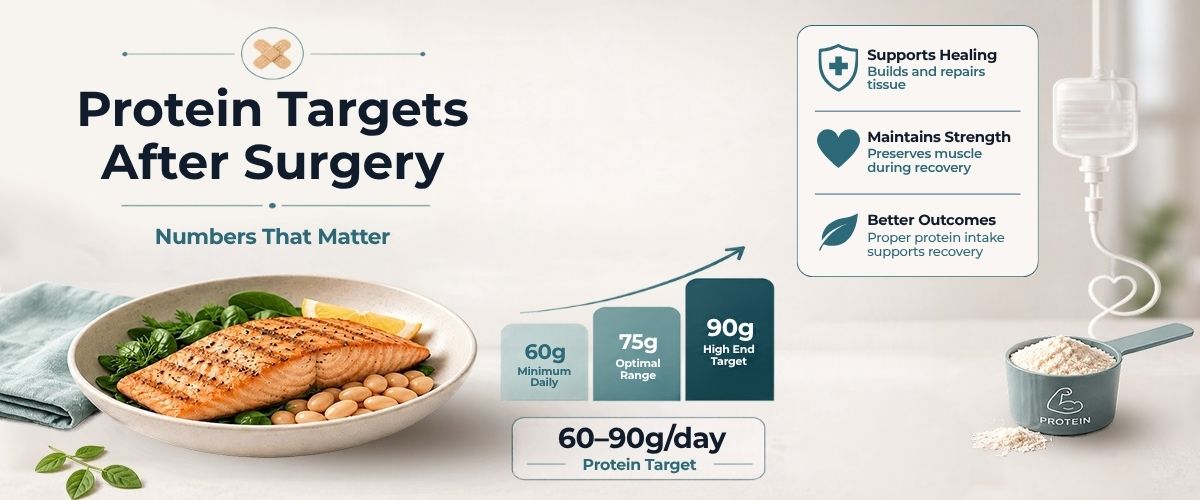
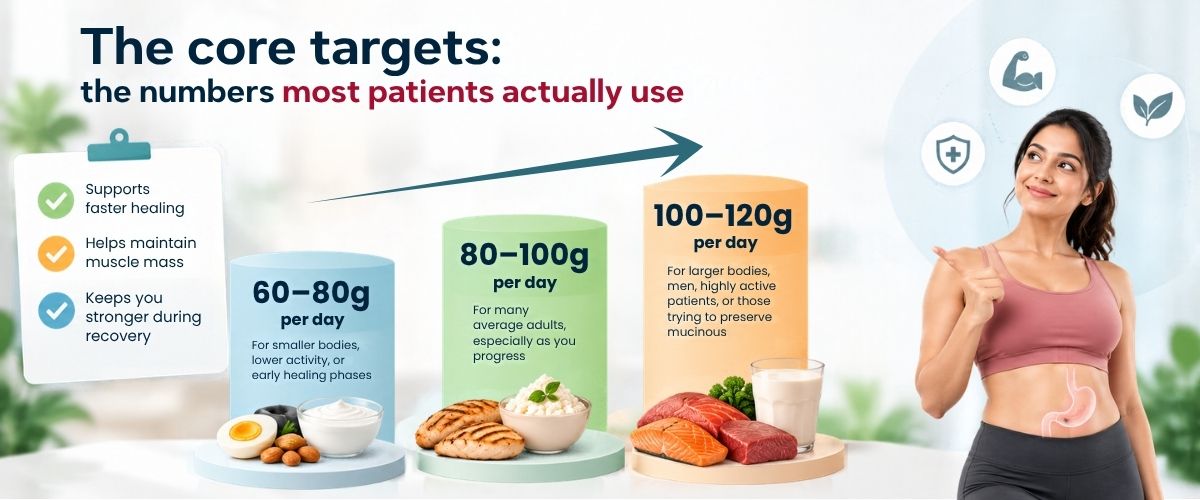
For many bariatric and metabolic surgery patients, a realistic target range is:
- 60 to 80 grams per day for smaller bodies, lower activity, or early healing phases
- 80 to 100 grams per day for many average adults, especially as you progress
- 100 to 120 grams per day for larger bodies, men, highly active patients, or those trying hard to preserve muscle
If you want one “sticky note number” to start with, a lot of people do well aiming for 80 grams per day and then adjusting based on their surgeon and dietitian’s guidance.
Weight based targets: the math that actually helps
A more personalized approach is grams of protein per kilogram of body weight. In surgical recovery (and also weight loss), the range usually sits around:
- 1.0 to 1.5 g/kg of ideal body weight for many post op bariatric patients
A quick way to estimate ideal body weight (IBW)
- Men: 50 kg + 2.3 kg for each inch over 5 feet
- Women: 45.5 kg + 2.3 kg for each inch over 5 feet
Then convert to a protein goal.
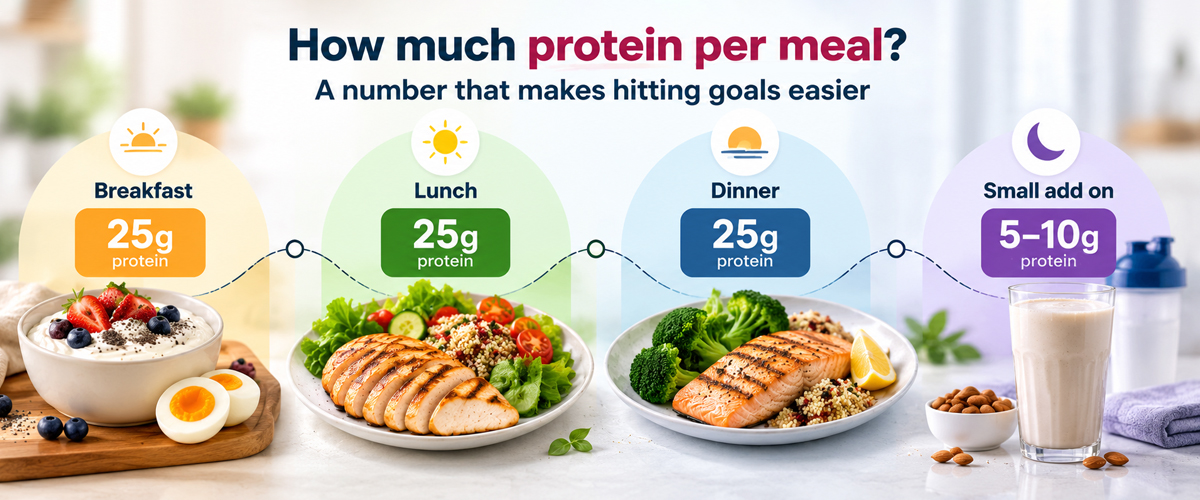
How much protein per meal? A number that makes hitting goals easier
Instead of one giant daily goal that feels far away, break it into meal targets.
A useful structure:
- 20 to 30 grams per main meal
- 10 to 20 grams per snack, if you use snacks
So if your goal is 80 grams, you could do:
- Breakfast 25 g
- Lunch 25 g
- Dinner 25 g
- Small add on 5 to 10 g
What “counts” as protein after surgery
Not all protein sources are equally easy post op. And not all are equally dense.
Here are rough protein counts that people can actually use.
High protein, small volume options
- Whey isolate scoop: usually 20 to 27 g (check label)
- Greek yogurt 200 g: often 15 to 20 g
- Paneer 100 g: roughly 18 to 20 g (varies by brand and fat)
- Egg (1 large): about 6 g
- Egg whites (2): about 7 g
- Chicken or fish 100 g cooked: often 22 to 30 g
- Dal 1 cup cooked: often 12 to 18 g depending on type and thickness
Early on, you might only tolerate 60 to 100 ml at a time. So protein density matters more than “healthy variety.”
A quick reality check people need
Many patients think: “I ate a bowl of soup, so I’m fine.”
But if it is mostly watery veg soup, that could be 2 to 4 grams of protein total.
Same with fruit. Same with most biscuits. They may sit well. They are not protein.
This is why protein shakes are so common after bariatric surgery. Not because they are magical. Because they are measurable and dense.
The biggest mistake: chasing protein but ignoring fluids
If fluids are low, everything gets harder. Constipation, fatigue, headaches, nausea. Then protein intake drops anyway because you feel awful.
So yes, protein is priority. But hydration is the track you run on.
A simple approach many clinics use:
- Sip fluids all day
- Keep a gap around meals as advised (often 30 minutes before and after meals, but follow your program)
- Use shakes strategically so you are not stuck choosing between water and protein
If you are underhydrated, your protein plan will feel impossible.
Protein and hair fall after weight loss surgery
Hair fall after bariatric surgery is common, usually around 3 to 6 months. It is called telogen effluvium, and it happens after physical stress, rapid weight loss, nutrient shifts. Protein is not the only factor. Iron, zinc, folate, and overall intake matter too.
But protein intake after bariatric surgery is still one of the controllables. If you are consistently at 30 grams a day when your body needs 80, that gap shows up later.
When your protein target should be higher
There are a few situations where your team may push you toward the higher end of the ranges for protein intake after bariatric surgery:
- You are male or have higher lean mass
- You are doing resistance training
- You are losing weight very fast and feel weak
- You have pressure sores, wound issues, or slower healing
- You had complications or are recovering from infection
- You are older (muscle preservation gets harder with age)
In these cases, 100 grams/day is not unusual. Sometimes more, but it needs to be realistic and monitored.
What to do if you cannot hit the number
This is where people spiral. Please do not. There are workarounds to get enough protein intake after bariatric surgery.
Try one or two of these, not all at once:
- Use half portions more often. Two mini shakes beat one big shake you cannot finish.
- Switch protein type. Some tolerate whey isolate better than concentrate. Some tolerate lactose free better. Some do better with savory options.
- Increase protein density. Same volume, higher grams. Look for 20 to 30 g per serving.
- Stop “testing” trigger foods. If bread, rice, or sweets slide down easily, they can crowd out protein fast.
- Track for three days only. Not forever. Just long enough to see the pattern. Most people underestimate intake by a lot.
- Ask for a structured plan. A written schedule works better than vague goals.
And if you are a CODSILS patient (or you want to be), this is exactly the kind of thing a good bariatric nutrition follow up should solve quickly. Not with guilt. With a plan.

A practical sample day: 80 to 90 grams
This is just an example. Your phase and tolerance matter.
- Breakfast: Greek yogurt, 200 g (18 g)
- Mid-morning: Whey isolate shake, 1 scoop (25 g)
- Lunch: Soft paneer or fish portion (20 g)
- Evening: Egg based option (2 eggs, 12 g)
- Dinner: Dal, thicker style, smaller bowl (15 g)
Total: about 90 grams
Notice what is missing. Random snacks. Constant nibbling. Most patients do better when protein intake after bariatric surgery is planned, not hoped for.
One last thing (because this is where outcomes improve)
Targets for protein intake after bariatric surgery are simple on paper. In real life, they can feel like a part time job. Especially in the first month.
If you want a tailored post op nutrition plan that matches your surgery type, your tolerance, and your weight loss phase, it helps to work with a clinic that does this every day, not occasionally. CODSILS does exactly that, and you can explore patient guidance or book a consultation at www.codsils.com if you want your targets and meal structure personalized.
Because the right protein number is not the one that sounds impressive.
FAQs (Frequently Asked Questions)
01 – Why is protein more important than calories immediately after surgery?
After surgery, your body’s healing processes require protein to repair tissue, close wounds, fight infection, and protect muscle. While calories are important, early post-op calorie intake is often naturally limited. Insufficient protein can lead to weakness, faster muscle loss, slower healing, and negative effects on hair and skin. Therefore, protein takes priority during early recovery phases.
02 – What are common daily protein intake targets after bariatric or metabolic surgery?
Protein targets vary based on body size, activity level, and recovery stage. Typical ranges include 60 to 80 grams per day for smaller bodies or early healing phases; 80 to 100 grams per day for average adults progressing in recovery; and 100 to 120 grams per day for larger bodies, men, highly active patients, or those focused on preserving muscle mass.
03 – How do I calculate a personalized protein goal based on my ideal body weight?
A practical method uses grams of protein per kilogram of ideal body weight (IBW). To estimate IBW: for men, start with 50 kg plus 2.3 kg for each inch over 5 feet; for women, start with 45.5 kg plus 2.3 kg per inch over 5 feet. Then multiply IBW by a target protein range—typically between 1.0 to 1.5 grams per kilogram depending on activity and recovery stage—to find your daily protein goal.
04 – Why should I use ideal body weight instead of current weight to set my protein goal?
Using ideal body weight prevents setting unrealistic protein targets that can occur if current weight is high due to obesity. This approach helps avoid overshooting protein needs early after surgery when intake is limited and absorption may differ, making goals achievable and tailored to support effective healing and muscle preservation.
